Many people measure their weight loss progress using a bathroom scale. While scales provide a simple way to track total body weight, they do not reveal what is actually changing inside the body.
Body weight can fluctuate for many reasons. Changes in hydration levels, food intake, muscle gain and even daily stress can influence the number on the scale. Because of this, weight alone does not always reflect meaningful changes in body composition.
During a structured fitness or weight loss program, it is possible to lose fat while simultaneously gaining lean muscle. In these cases, total body weight may remain relatively stable even though the body is becoming leaner and stronger. Without accurate measurement, these positive changes can be difficult to identify.
Body composition analysis provides a clearer way to track progress. Instead of focusing only on total weight, it measures the different components that make up the body, including fat mass, lean muscle mass and bone mass.
DEXA scanning is widely considered one of the most accurate methods available for measuring body composition. By analysing fat and muscle separately, it allows individuals to track fat loss with far greater clarity than scale weight alone.
Key Takeaways
- Weight loss and fat loss are not always the same thing.
- The scale cannot distinguish between fat, muscle and water weight.
- Body composition analysis provides a clearer picture of progress
- DEXA scans measure fat mass and lean muscle mass with high precision.
- Tracking body composition over time can help monitor meaningful fat loss progress.
Summary Table: Tracking Weight Loss vs Fat Loss
| Measurement Method | What It Shows | Limitations |
| Bathroom Scale | Total body weight | Cannot distinguish fat, muscle or water weight |
| Body Measurements | Changes in body size and circumference | May not reflect internal body composition |
| Smart Scales | Estimated body fat percentage | Accuracy can vary depending on hydration and other factors |
| DEXA Scan | Fat mass, lean muscle mass and fat distribution | Provides detailed body composition analysis |
Why the Scale Does Not Tell the Full Story
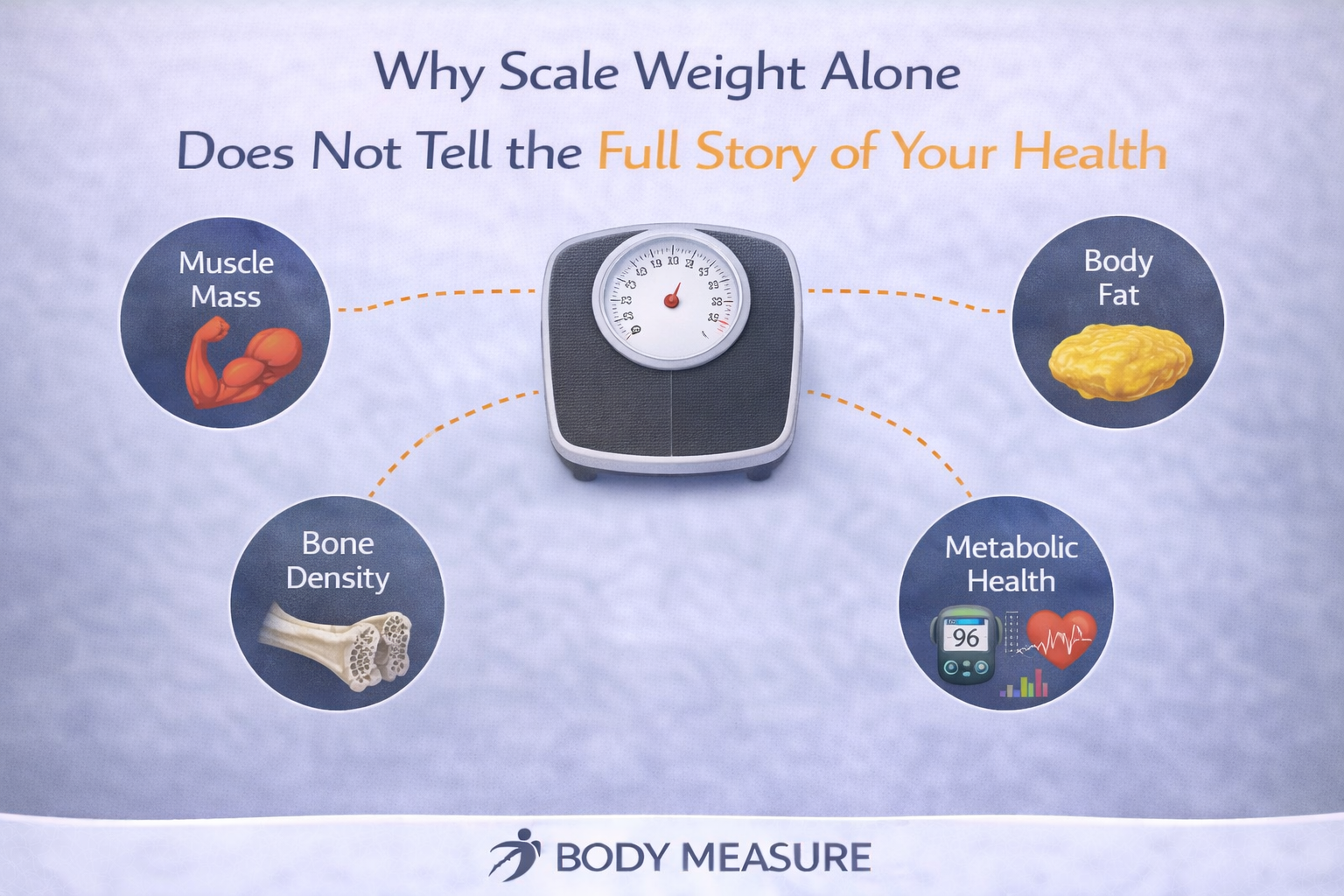
Bathroom scales provide a quick way to track total body weight, but they offer only a limited view of what is happening inside the body. The number displayed on the scale represents the combined weight of fat, muscle, bone, water and other tissues. Because these components can change independently, body weight alone does not always reflect meaningful progress.
Daily fluctuations in weight are common. Factors such as hydration levels, sodium intake, hormonal changes and recent physical activity can all influence scale weight. These variations can occur even when body composition remains relatively stable.
During a weight loss journey, the body may also adapt in ways that are not immediately visible on the scale. For example, someone following a strength training program may gain lean muscle while losing fat at the same time. Muscle tissue is denser than fat, so these changes can occur without a large change in total body weight.
Because of these factors, relying solely on scale weight can sometimes lead to confusion. Positive changes in body composition may not always be reflected in the number on the scale. This is why more detailed measurement methods are often used to evaluate progress more accurately.
Weight Loss vs Fat Loss: Understanding the Difference
Although the terms weight loss and fat loss are often used interchangeably, they represent different physiological changes. Weight loss refers to a reduction in total body weight, while fat loss specifically refers to a decrease in body fat.
When someone loses weight, that change may come from several sources. The body may lose fat mass, lean muscle mass or water weight depending on factors such as diet, physical activity and overall health.
For many individuals, the goal of a fitness or health program is not simply to reduce body weight but to improve body composition. This means reducing fat mass while maintaining or increasing lean muscle mass. Improving this balance can support physical performance, metabolic health and overall wellbeing.
Because weight loss alone does not indicate what tissues are changing, body composition analysis provides a clearer picture of progress. By measuring fat mass and lean muscle mass separately, it allows individuals to see whether their efforts are contributing to meaningful fat loss rather than changes in weight alone.
How DEXA Measures Fat Loss with Greater Accuracy
DEXA scanning provides a detailed view of body composition by separating the body into three primary components: fat mass, lean mass and bone mass. This level of analysis allows changes in fat and muscle to be measured independently rather than being grouped together as total body weight.
The technology works by using two low-dose X-ray beams that pass through the body at different energy levels. Because fat tissue, muscle and bone absorb the X-rays differently, the system can accurately calculate how much of each component is present.
For individuals focused on fat loss, this level of detail is particularly valuable. Instead of estimating body fat based on electrical signals or general formulas, DEXA measures body composition directly. This provides a much clearer picture of where fat is stored and how it changes over time.
DEXA also provides regional body composition analysis. This means the scan can identify fat and lean mass distribution across different areas of the body such as the arms, legs, trunk and abdominal region. Tracking these changes can help individuals better understand how their training, nutrition and lifestyle habits are influencing body composition.
Because results are consistent and repeatable, DEXA scans are commonly used in medical research, clinical practice and professional sport to monitor body composition with a high level of reliability.
Tracking Fat Loss Over Time with Repeat Scans
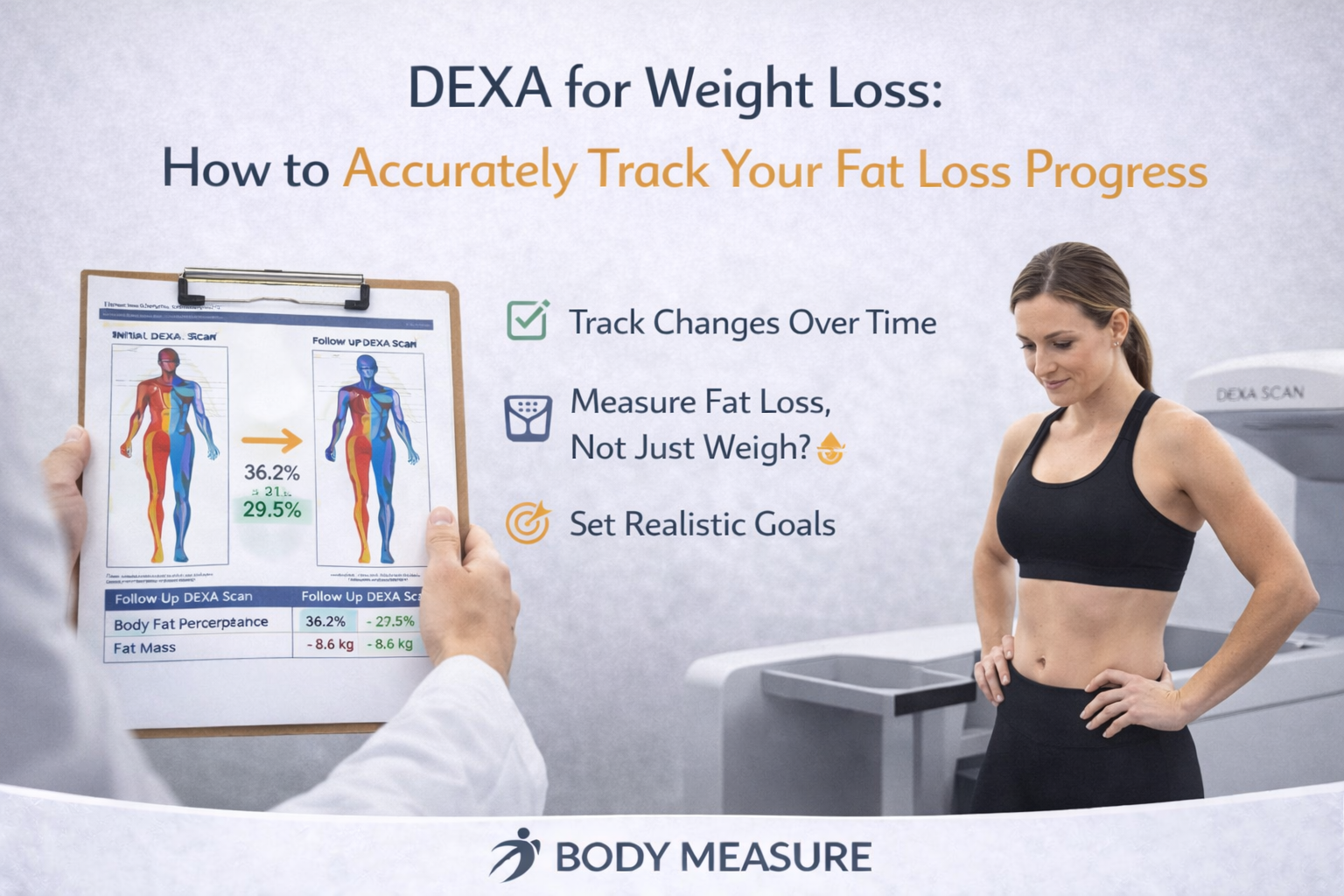
One of the most useful aspects of DEXA scanning is the ability to monitor changes in body composition over time. A single scan provides a baseline measurement, while repeat scans allow individuals to track how their body is responding to training, nutrition and lifestyle adjustments.
By comparing scans taken several weeks or months apart, it becomes possible to see whether fat mass is decreasing, lean muscle mass is increasing or both are occurring simultaneously. This level of insight can help confirm whether a program is working or whether adjustments may be needed.
For people pursuing fat loss, this information can be particularly motivating. Changes that might not appear on the scale can often be clearly seen in body composition data. For example, someone may maintain a stable body weight while losing fat and gaining muscle. Without detailed analysis, this progress might otherwise go unnoticed.
Repeat scanning also helps provide a more objective view of long-term trends. Instead of relying on short-term fluctuations, individuals can evaluate measurable changes in body composition across a structured timeframe.
At Body Measure, DEXA body composition scans provide a consistent method for tracking these changes, helping individuals monitor fat loss progress with reliable data rather than relying on scale weight alone.
Why Athletes and Fitness Enthusiasts Use DEXA for Fat Loss Tracking
Many athletes and fitness enthusiasts use DEXA scanning because it provides a more accurate and detailed understanding of body composition changes during training programs. Unlike traditional tracking methods, DEXA allows fat loss and muscle development to be measured independently.
In structured training environments, particularly those involving resistance training, it is common for individuals to gain lean muscle while reducing body fat. Because muscle tissue is denser than fat, total body weight may remain stable or even increase slightly during this process. Without body composition analysis, these positive adaptations can easily be overlooked.
DEXA scans help reveal these changes by separating fat mass and lean mass in the results. This makes it possible to identify whether a program is improving body composition even if scale weight appears unchanged.
Athletes also value the regional analysis provided by DEXA. The scan can highlight differences in muscle distribution or fat storage across different areas of the body. This information can support more targeted adjustments in training programs or recovery strategies.
Because the data is highly detailed and repeatable, DEXA has become widely used across professional sport, high-performance training environments and evidence-based fitness programs.
Final Thoughts
Tracking fat loss effectively requires more than simply watching the number on a scale. While scale weight can provide a general indicator of change, it cannot reveal how body composition is evolving beneath the surface.
For individuals focused on improving body composition, understanding the difference between fat loss and weight loss is essential. Changes in muscle mass, hydration and other factors can all influence body weight without accurately reflecting progress.
DEXA body composition scans provide a clearer and more reliable way to measure these changes. By analysing fat mass, lean muscle mass and fat distribution separately, DEXA offers a detailed view of how the body responds to training, nutrition and lifestyle adjustments over time.
At Body Measure, DEXA scanning helps individuals track fat loss with precision, providing objective data that supports more informed health and fitness decisions.
FAQs Answered
Can a DEXA scan help track fat loss more accurately than a scale?
Yes. A DEXA scan measures fat mass and lean muscle mass separately, which allows fat loss to be tracked directly. A scale only shows total body weight and cannot distinguish between fat, muscle or water weight. Because of this, DEXA provides a far clearer picture of body composition changes.
How much fat loss can a DEXA scan detect?
DEXA scans are sensitive enough to detect relatively small changes in body composition. When scans are repeated over time using consistent protocols, they can identify measurable changes in fat mass and lean muscle mass that may not be visible through body weight alone.
How often should you get a DEXA scan when trying to lose fat?
For most people, repeating a DEXA scan every 8 to 12 weeks provides enough time for meaningful changes in body composition to occur. This timeframe allows fat loss and muscle development to be detected reliably without being influenced by short-term fluctuations.
Can DEXA show fat loss even if body weight stays the same?
Yes. It is possible to lose fat while gaining muscle, particularly during strength training programs. In these situations, body weight may remain relatively stable. DEXA separates fat mass from lean muscle mass, allowing these changes to be clearly identified.
Where can you get a DEXA body composition scan in Sydney?
DEXA body composition scans are available through specialised body composition clinics. Body Measure offers professional DEXA scanning in Sydney using medical-grade equipment and consistent testing protocols designed to provide reliable and repeatable body composition data.