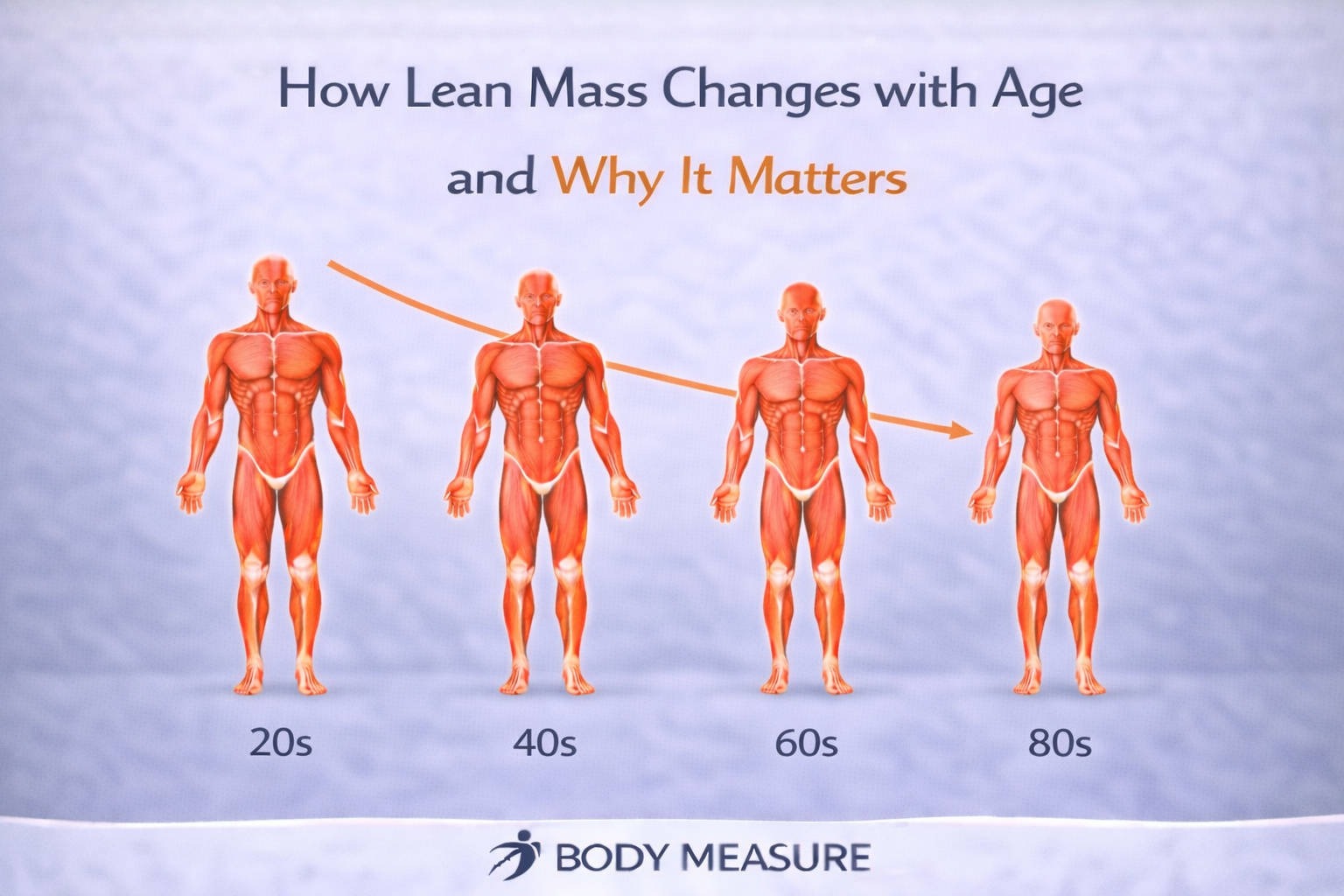
As people get older, body weight often gets most of the attention. But weight alone does not show an important part of the picture: how much lean mass the body is carrying, and whether that is changing over time. Lean mass is closely tied to strength, movement, recovery and physical function, which means it can play a major role in how well someone ages. Age-related loss of muscle mass, strength and function is commonly referred to as sarcopenia.
These changes do not happen in exactly the same way for everyone. Activity levels, illness, nutrition, training history and general health can all influence how lean mass changes across adult life. What matters is that lean mass loss can affect more than appearance. It can influence mobility, balance, independence and day-to-day capability as people age.
That is why understanding lean mass can be more useful than relying on scale weight alone. A body composition view gives a better context for what is actually changing in the body.
Key Takeaways
- Lean mass often changes with age, especially when physical activity and muscle-strengthening work are not supporting muscle health.
- Age-related loss of muscle mass, strength and function is known as sarcopenia.
- Changes in lean mass can affect mobility, balance, physical function and independence over time.
- Scale weight alone cannot show whether lean mass is being lost, maintained or regained.
- Body composition testing can help separate lean mass from fat mass and provide a clearer view of ageing-related change.
Summary Table
| Topic | Why It Matters |
| Lean mass | Supports movement, strength and physical function |
| Age-related muscle loss | Can affect mobility, balance and independence over time |
| Weight alone | Does not show whether lean mass is being lost |
| Body composition testing | Helps separate lean mass from fat mass |
| DEXA body composition scan | Can estimate total and regional lean mass |
| Bone health | Related, but separate from lean mass and should not be confused with BMD testing |
What Is Lean Mass?
Lean mass refers to everything in the body that is not fat mass. In body composition testing, this generally includes muscle, organs, connective tissue and body water, while bone is usually reported separately as bone mass. That is why lean mass is related to muscle health, but it is not exactly the same thing as muscle alone.
This distinction matters because body weight by itself cannot tell you whether changes are happening in fat tissue, lean tissue or both. When people talk about ageing well, staying strong or maintaining function, lean mass is often a more useful concept than scale weight alone. It helps explain what may be happening beneath the surface, even when body weight appears stable.
How Lean Mass Typically Changes with Age
Lean mass often declines with age, particularly when physical activity, muscle-strengthening exercise, nutrition and general health are not supporting it. Age-related loss of muscle mass, strength and function is commonly referred to as sarcopenia, though the rate and extent of change can vary a lot from one person to another.
This is not something that appears overnight. It often happens gradually across adult life and may become more noticeable after periods of inactivity, illness, injury or reduced resistance training. The National Institute on Aging notes that strength training can help older adults maintain muscle mass and improve mobility, which is one reason these changes matter in the first place.
Why Lean Mass Matters More Than Many People Realise
Lean mass matters for much more than appearance. It supports strength, balance, movement and the ability to manage everyday tasks with confidence. When lean mass and muscle function decline, people may notice that activities such as climbing stairs, carrying groceries or getting up from a chair feel harder than they once did. The NIH notes that age-related loss of muscle mass and function can affect mobility and independence over time.
This is why lean mass is such an important part of healthy ageing. It is closely linked to physical capability, recovery and resilience. Looking only at body weight can miss these changes completely, especially when weight remains stable while body composition shifts underneath.
Why the Scales Can Miss Important Changes
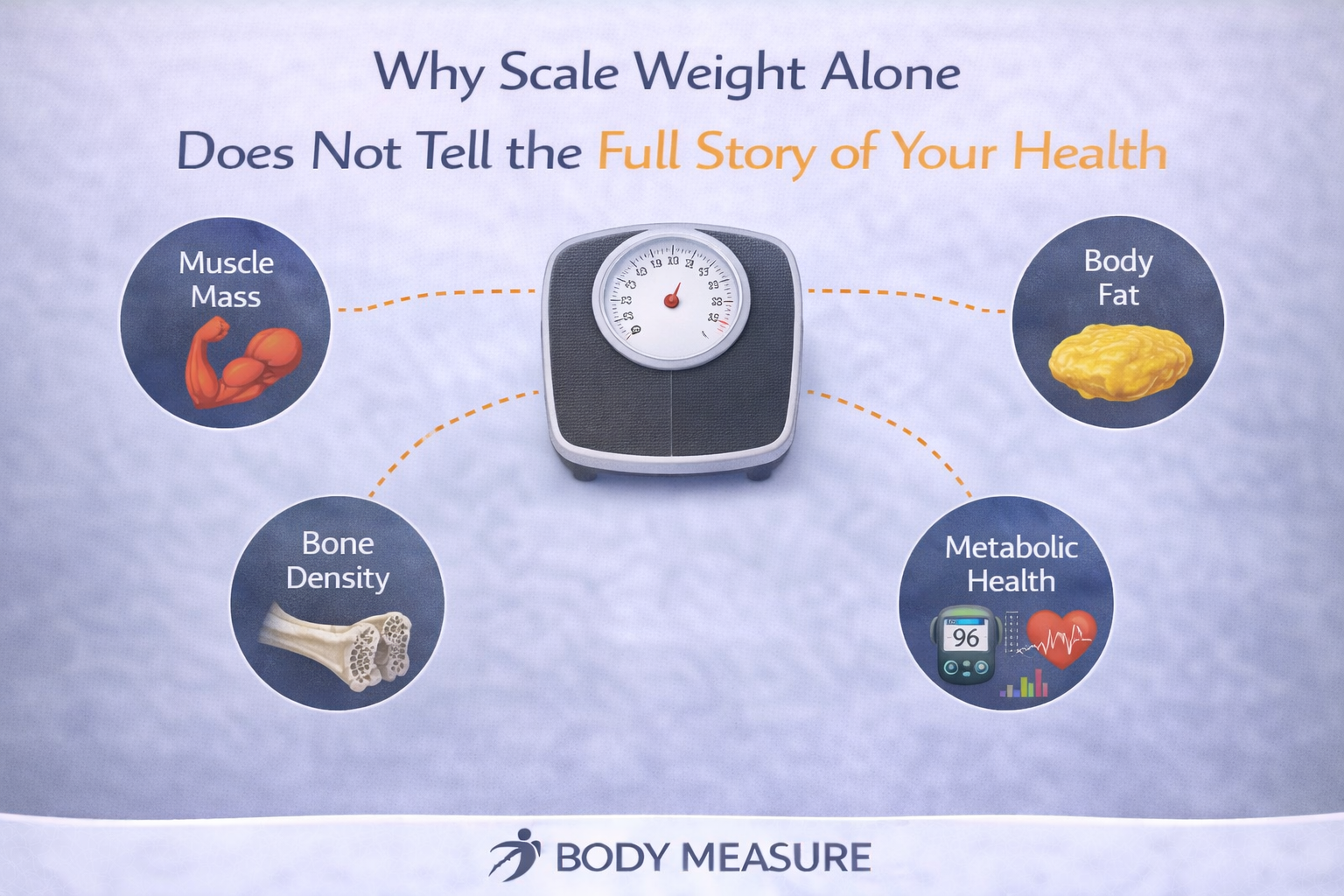
The scales only show total body weight. They do not show whether that weight is coming from fat mass, lean mass, bone mass or short-term changes in fluid balance. This means someone can maintain a similar body weight while gradually losing lean mass and gaining fat mass at the same time.
That is one reason scale weight can be misleading in midlife and later years. A stable number on the scales may look reassuring, but it does not confirm that muscle health is being maintained. Body composition testing provides a more useful layer of detail because it helps show what is actually changing, rather than just whether total weight has moved.
What Causes Lean Mass to Change as We Age?
Lean mass can change for several reasons as people get older. One of the biggest is reduced physical activity, especially less resistance or muscle-strengthening work. Periods of illness, injury, bed rest or simply doing less over time can also contribute to lean mass loss. Nutrition matters too, because inadequate overall intake or low protein intake can make it harder to maintain muscle tissue as the body ages. NIH guidance notes that age-related muscle loss is common, but activity and nutrition remain important influences on how much change occurs.
The key point is that these changes are not caused by age alone in a simple or uniform way. Training history, general health, recovery capacity and lifestyle all shape the pattern. That is why two people of the same age can have very different body composition and physical function.
Can You Slow Age-Related Lean Mass Loss?
In many cases, yes. While some change with age is normal, research-backed guidance consistently points to physical activity, especially strength training, as one of the most effective ways to help maintain muscle mass and function. The National Institute on Aging notes that strength training can help older adults maintain muscle, improve mobility and support independence, while broader activity patterns that include balance and aerobic work also matter for healthy ageing.
Nutrition also plays an important role. Eating enough overall, and getting adequate protein, helps support muscle maintenance alongside exercise. This is not about chasing perfection. It is about understanding that lean mass is something that can often be supported rather than simply watched decline. For people concerned about healthy ageing, that is an important shift in mindset.
How DEXA Helps You Track Lean Mass More Clearly
A body composition DEXA scan can help show whether changes in your body are coming from lean mass, fat mass or both. Instead of relying on total weight alone, it provides a more detailed breakdown of body composition, including total and regional lean mass. That can be especially useful when someone wants to understand whether ageing, training, inactivity or recovery is affecting muscle-related tissue over time. The Australian Institute of Sport describes DXA as a high-quality method for body composition assessment when standardised protocols are followed.
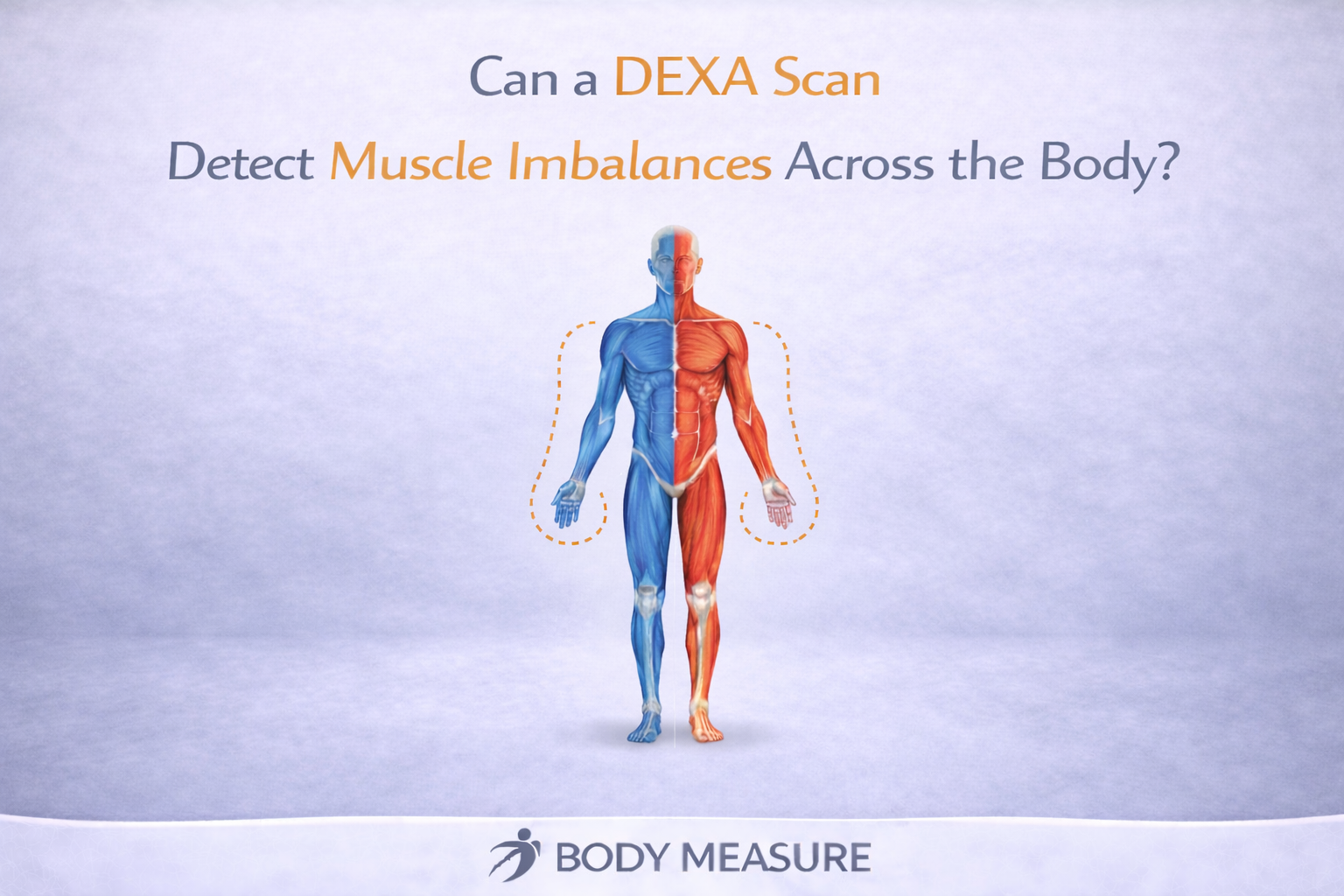
DEXA can also show how lean mass is distributed across different parts of the body, such as the arms, legs and trunk. This makes it more informative than the scales when you are trying to understand whether body composition is changing in a meaningful way. It is important to keep the terminology clear, though. A body composition DEXA scan may report bone mass as part of the overall picture, but that is different from bone mineral density, and a body composition DEXA scan is not the same as a dedicated medical BMD exam.
What This Means if You Are Focused on Healthy Ageing in Sydney
If you are focused on healthy ageing, scale weight alone will often leave important questions unanswered. It may show whether your total weight has changed, but it cannot show whether you are maintaining lean mass, losing it gradually, or replacing it with fat mass over time. For many adults, that is the more useful question.
For people in Sydney who want a clearer understanding of how body composition is changing with age, DEXA can offer a more practical and informative baseline. At Body Measure, this kind of testing helps shift the conversation away from guesswork and towards a better understanding of lean mass, fat mass and overall body composition. That can be valuable for anyone wanting to make more informed decisions about strength, activity and healthy ageing over time.
Final Thoughts
Lean mass changes with age, but those changes are not just about appearance. They can influence strength, mobility, balance and how well someone maintains independence over time. That is why looking beyond body weight becomes so important. A stable number on the scales does not always mean muscle-related tissue is being maintained in the way you might expect.
Understanding lean mass gives a clearer picture of how the body is ageing. For people who want more than guesswork, body composition testing can help show whether changes are coming from lean mass, fat mass or both. At Body Measure, that clarity helps support a more informed approach to healthy ageing.
FAQs
Should I get a DEXA scan if I am concerned about losing muscle as I age?
If you want a clearer picture of whether your body composition is changing with age, a DEXA scan can be a very useful starting point. It can help show how much lean mass you are carrying and whether that is changing over time, which is often far more informative than body weight alone.
Can Body Measure help me track lean mass as I get older?
Yes. At Body Measure, DEXA body composition scanning can help you track lean mass, fat mass and regional body composition over time. This can be helpful if you want a clearer baseline, are returning to exercise, or want more insight into how your body is changing with age.
Is a DEXA scan better than the scales for tracking age-related body changes?
In most cases, yes. The scales only show total body weight, while a DEXA scan provides a breakdown of lean mass, fat mass and bone mass. That makes it much more useful if your goal is to understand what is actually changing in the body.
When should I book a DEXA scan for healthy ageing?
A DEXA scan can be worth considering when you want a baseline, when your strength or body composition seems to be changing, or when you want more objective information to guide exercise and health decisions. Many people also find it useful as part of a broader healthy ageing plan.
Can a DEXA scan show whether I am losing muscle or gaining fat?
A body composition DEXA scan can help show whether changes are occurring in lean mass, fat mass or both. That is one of the main reasons it can be so useful for adults who want more clarity than body weight alone can provide.
Where can I book a private DEXA scan in Sydney for lean mass tracking?
If you are looking for a private DEXA scan in Sydney, Body Measure offers body composition testing designed to help you understand lean mass, fat mass and overall body composition with more clarity and confidence.