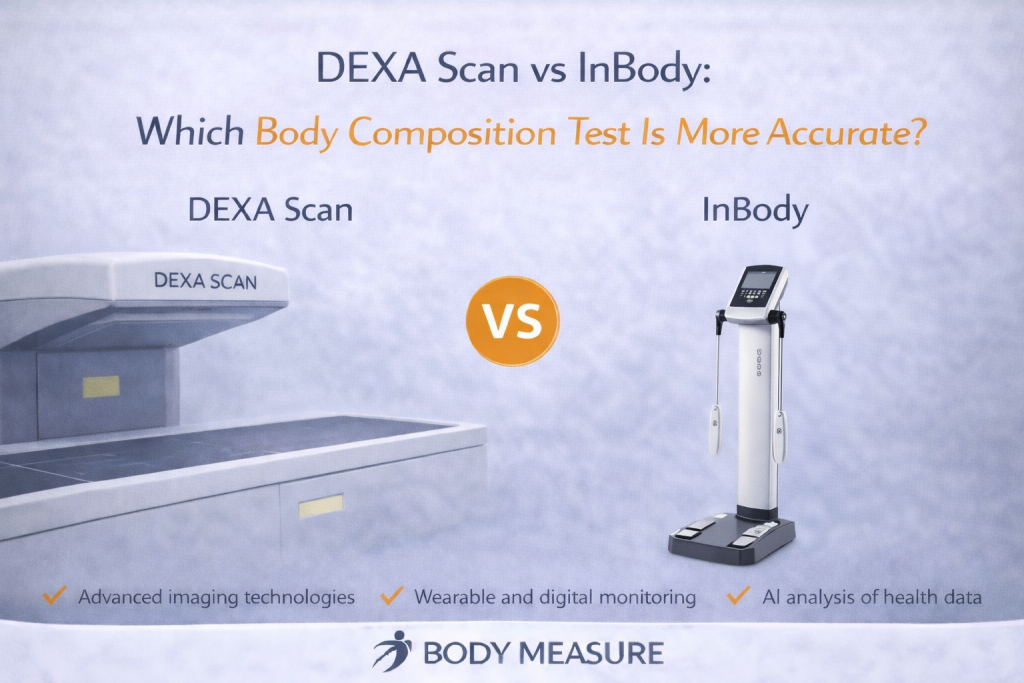
When people want a clearer picture of their health, fitness progress or body composition, they often end up comparing two common options: a DEXA scan and an InBody test. Both are designed to go beyond simple scale weight, but they do not measure the body in the same way, and they do not offer the same level of detail or consistency.
This is where confusion often starts. Someone may be told they have gained muscle, lost body fat or improved their overall body composition, only to find that a different machine or a different testing day gives them a different result. That can make it difficult to know which data to trust, especially if you are using those results to guide training, nutrition or long-term health decisions.
A DEXA scan uses low-dose X-ray technology to assess body composition in detail, including fat mass, lean mass and bone mass. InBody uses bioelectrical impedance analysis, which estimates body composition based on how electrical currents move through the body. Both can be useful, but they serve different purposes.
If the question is purely about accuracy, DEXA is generally considered the stronger option for body composition analysis. InBody can still be helpful for quick, routine tracking, but its results are more easily influenced by factors such as hydration, food intake and timing. For people in Sydney who want a more precise body composition baseline, that difference matters.
Key Takeaways
- DEXA and InBody both assess body composition, but they use very different technology.
- DEXA is generally the more accurate option for measuring body fat, lean mass and body composition distribution.
- InBody is faster and more convenient, but its results can be more affected by hydration, meals, exercise and time of day.
- DEXA provides more detailed regional analysis, including differences between the trunk, arms and legs.
- InBody can still be useful for trend tracking when tests are done under highly consistent conditions.
- A body composition DEXA scan is not the same as a medical bone mineral density exam, even though both use DXA technology.
- Bone mass reported in body composition testing is different from bone mineral density, or BMD.
Summary Table
| Feature | DEXA Scan | InBody |
| Technology | Dual-energy X-ray absorptiometry | Bioelectrical impedance analysis |
| How it works | Uses low-dose X-rays to assess tissue composition | Uses electrical current to estimate body composition |
| Main outputs | Fat mass, lean mass, bone mass, regional body composition | Estimated body fat, skeletal muscle, body water and related metrics |
| Accuracy | Generally higher for body composition analysis | Useful, but more dependent on testing conditions |
| Sensitivity to hydration | Lower | Higher |
| Detail level | High | Moderate |
| Regional analysis | Strong | More limited |
| Best use case | Detailed baseline testing and progress review | Quick check-ins and routine tracking |
| Bone-related information | Can include bone mass within body composition reporting | Does not assess bone mineral density |
| Ideal for | People wanting more precise, detailed insight | People wanting speed and convenience |
What Is a DEXA Scan for Body Composition?
A DEXA scan for body composition is an imaging-based test that estimates fat mass, lean mass and bone mass across the body. Unlike methods that rely on prediction equations, DEXA uses low-dose X-ray technology to assess different tissue types and provide a more detailed picture of body composition. It is widely used in clinical, research and performance settings because of its strong precision and regional detail.
One of its key strengths is regional analysis. A DEXA scan can show how body composition is distributed through the trunk, arms and legs, which is useful when tracking fat loss, muscle gain or changes over time. It is also important to distinguish bone mass from bone mineral density (BMD). A body composition DEXA scan may report bone mass as part of the overall composition picture, but that is not the same as a dedicated medical BMD exam.
What Is InBody and How Does It Work?
InBody is a branded form of bioelectrical impedance analysis, or BIA. It estimates body composition by sending a very low electrical current through the body and measuring impedance, which is then used to calculate values such as body fat, skeletal muscle and body water. The test is fast, non-invasive and easy to repeat, which is why it is commonly used in gyms and wellness settings.
Its main limitation is that it is more sensitive to testing conditions. Hydration, food intake, exercise and time of day can all influence the result, which means readings may vary more from one test to the next. That does not make InBody useless, but it does mean it is generally better suited to convenient trend tracking than high-precision body composition analysis.Which Test Is More Accurate for Measuring Body Composition?
If the question is strictly about accuracy, DEXA is generally the stronger option. It uses imaging technology to assess body composition directly, rather than estimating it from electrical impedance. That gives it an advantage when someone wants a clearer view of fat mass, lean mass and body composition distribution.
DEXA is also less influenced by short-term variables such as hydration status, which helps improve consistency between tests. For people using results to guide training, nutrition or broader health decisions, that extra confidence can be important.
That said, more accurate does not mean InBody has no value. InBody can still be useful for general trend tracking, especially when tests are repeated under similar conditions. But for a more precise baseline or a more detailed review of body composition, DEXA is usually the better choice.
Why InBody Results Can Change More Easily from Day to Day
One of the main limitations of InBody is that results can shift based on testing conditions. Because it relies on bioelectrical impedance, changes in body water can affect the readings. That means hydration, meals, recent exercise and even the time of day may influence the result.
For example, someone who tests after training, later in the day, or after eating may see different values compared with a morning test done in a more standardised state. This does not always reflect a true change in body composition. In some cases, it is simply a change in measurement conditions.
This is why InBody works best when testing is done as consistently as possible. DEXA is not completely immune to variation, but it is generally less sensitive to these day-to-day fluctuations, which is one reason it is often preferred when accuracy matters more.
What DEXA Can Show That InBody Often Cannot
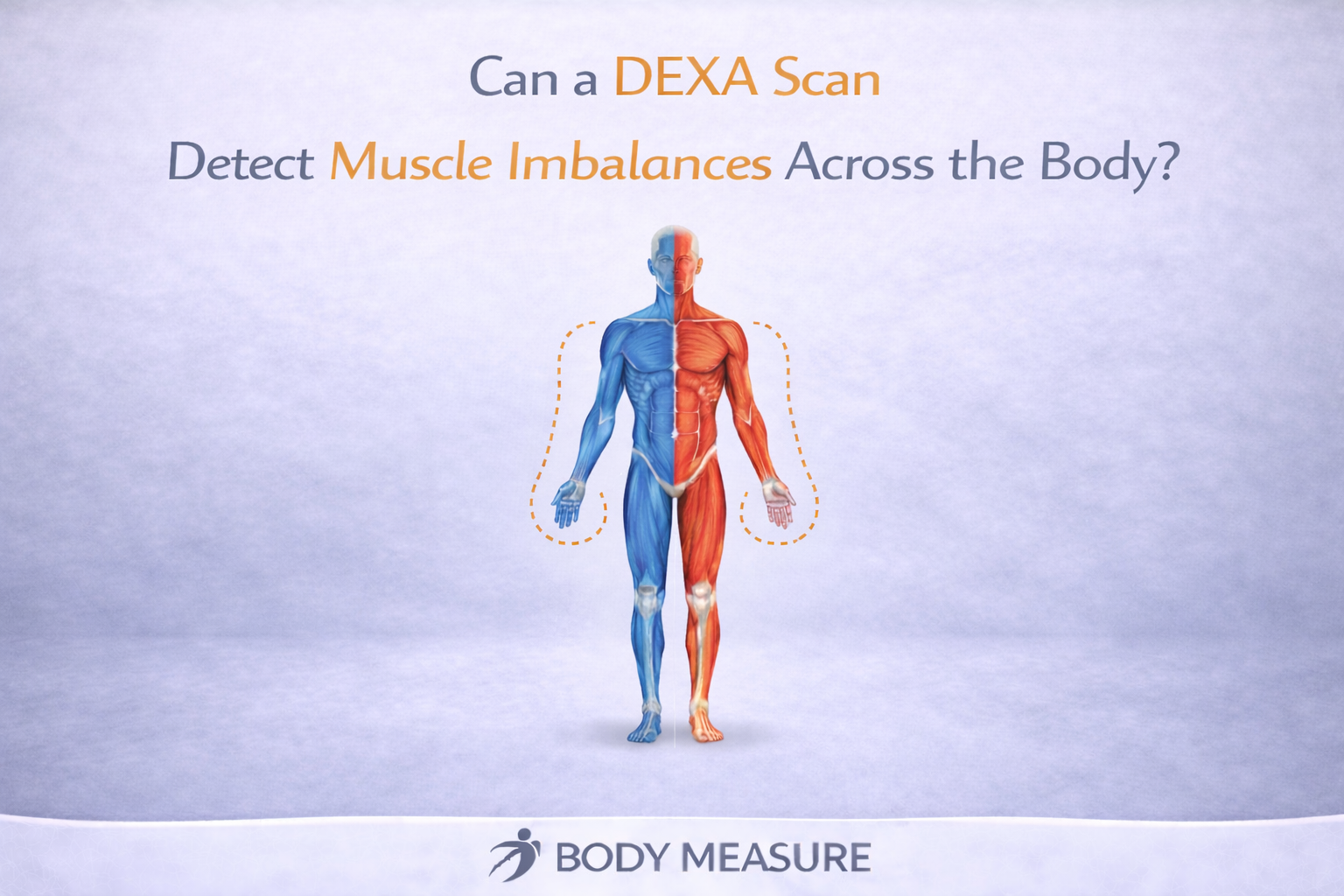
One of the biggest advantages of DEXA is the level of detail it can provide. Rather than giving a broad estimate alone, it can show how fat mass and lean mass are distributed across different regions of the body, including the trunk, arms and legs. This can be especially useful for people who want more than a single body fat percentage.
That regional view can help identify patterns that may be missed on a simpler test. For example, someone may see whether weight loss is occurring mainly through fat mass, whether lean mass is being maintained, or whether there are side-to-side differences worth monitoring. For athletes and active adults, this can make progress tracking more meaningful.
DEXA may also report bone mass within the body composition scan, which adds further context to the overall picture. It is important, however, not to confuse this with bone mineral density. Bone mass in a body composition report is not the same as a dedicated BMD assessment.
Is InBody Good Enough for Routine Progress Tracking?
In many cases, yes. InBody can be useful for routine progress tracking when the main goal is to monitor general trends over time rather than obtain the most precise measurement possible. Its speed and convenience make it appealing for people who want regular check-ins without booking a more detailed scan.
The key is consistency. InBody results are more useful when tests are done under similar conditions, such as at the same time of day, with similar hydration, and without recent exercise or large meals. When that happens, the machine can still provide practical insight into overall direction of change.
Where it becomes less reliable is when people treat small shifts in the numbers as highly precise. For those wanting a stronger baseline, greater detail, or more confidence in whether fat and lean tissue are truly changing, DEXA is usually the better fit.
When a DEXA Scan Makes More Sense Than InBody
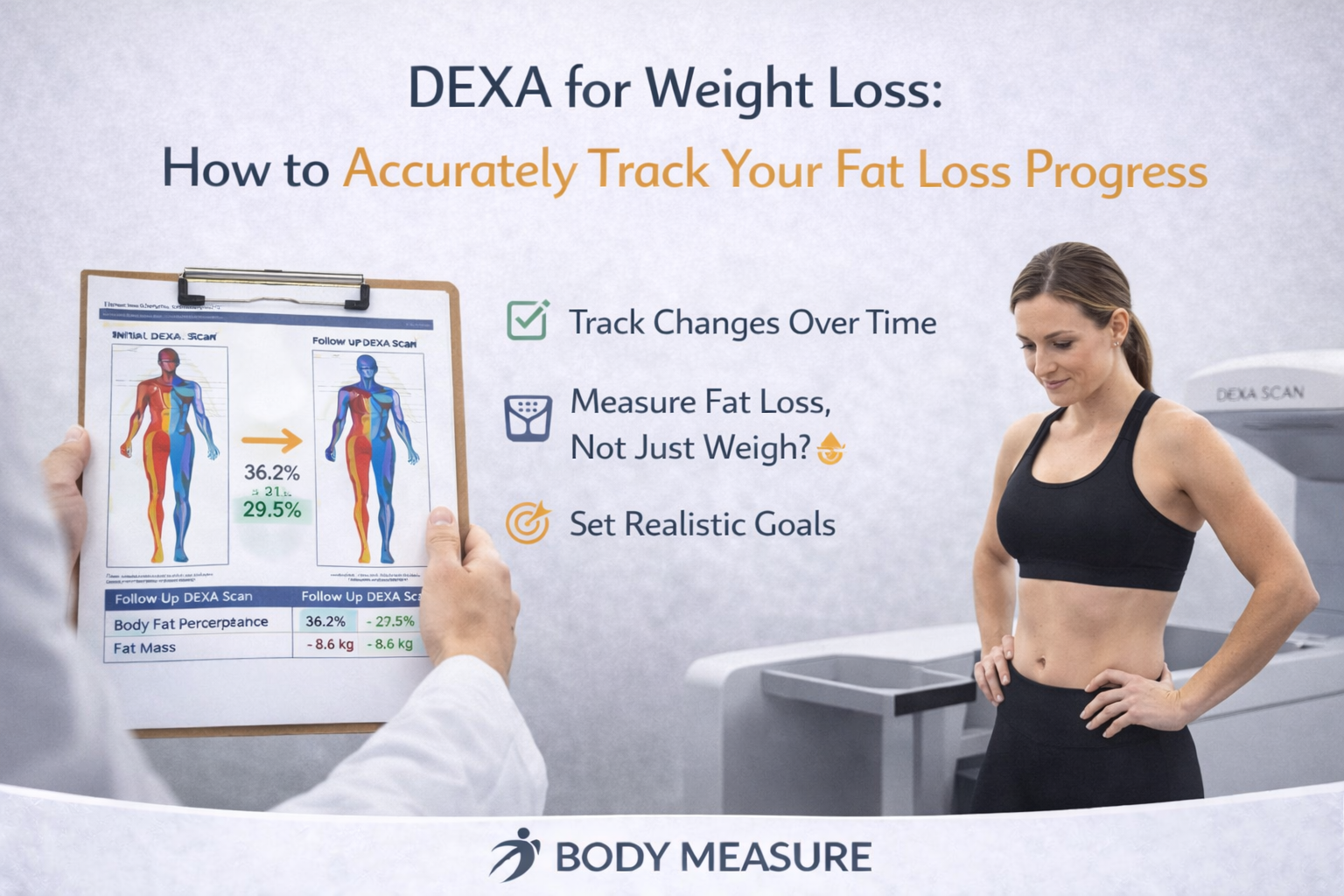
A DEXA scan makes more sense when accuracy and detail matter more than speed. This is often the case for people establishing a true baseline, checking whether weight loss is coming from fat rather than lean tissue, or tracking muscle gain with greater confidence. It can also be more useful for people who want a clearer picture of body composition distribution rather than a broad estimate alone.
It may also suit people returning to structured training, working towards a specific physique or performance goal, or trying to better understand changes that are not obvious from scale weight. In these cases, more detailed data can support better decisions around nutrition, exercise and progress reviews.
For people in Sydney comparing their options, the choice often comes down to convenience versus clarity. If the goal is to get the most informative picture of body composition, DEXA is usually the stronger option.
What This Means if You Are Choosing a Test in Sydney
If you are deciding between DEXA and InBody in Sydney, it helps to start with the reason you want to test. If you want a quick, convenient snapshot and plan to repeat testing regularly under similar conditions, InBody may be enough for general trend tracking.
If you want more confidence in the data, DEXA is usually the better choice. It offers a more detailed analysis of fat mass, lean mass and body composition distribution, which can be more useful when tracking meaningful change over time. This is especially relevant if you are using the results to guide health, fitness or performance decisions.
For people looking for a private body composition clinic in Sydney, Body Measure provides DEXA-based testing designed to give a clearer and more reliable picture than convenience-based methods alone.
Final Thoughts
If the question is which test is more accurate, DEXA is generally the better answer. It provides a more detailed and consistent view of body composition, including fat mass, lean mass and how those tissues are distributed across the body. That makes it a stronger option for people who want more than a quick estimate.
InBody still has a place. It can be useful for convenient trend tracking when testing conditions are kept consistent. But for people who want greater clarity, a stronger baseline and more confidence in the data, DEXA is usually the more valuable choice.
At Body Measure, we see this as less about hype and more about choosing the right level of insight for the decision you are trying to make.
FAQs
Is a DEXA scan more accurate than InBody?
In most cases, yes. DEXA is generally considered more accurate for body composition analysis because it uses imaging technology rather than estimation through electrical impedance. That usually makes it the better option when you want more confidence in fat mass, lean mass and body composition distribution.
What is the difference between DEXA and InBody?
DEXA uses low-dose X-ray technology to assess body composition, while InBody uses bioelectrical impedance analysis to estimate it. In simple terms, DEXA is usually better for detail and accuracy, while InBody is better for speed and convenience.
Can hydration affect InBody results?
Yes. InBody results can be influenced by hydration, recent meals, exercise and time of day. That is why testing conditions need to be kept as consistent as possible if you are using it to track progress over time.
Is DEXA better for tracking fat loss and muscle gain?
Usually, yes. DEXA can give a clearer picture of whether changes are coming from fat mass or lean mass, which is especially useful when body weight alone is not telling the full story. This makes it a strong option for people focused on body recomposition, training progress or more informed health tracking.
Should I choose DEXA or InBody for body composition testing in Sydney?
That depends on what you want from the test. If you want a fast snapshot and are mainly watching broad trends, InBody may be enough. If you want a more detailed and reliable body composition assessment, DEXA is usually the better choice. For people wanting private DEXA testing in Sydney, Body Measure offers a more precise starting point.
Does a body composition DEXA scan also measure bone density?
Not in the same way as a dedicated medical bone mineral density exam. A body composition DEXA scan may report bone mass as part of the overall composition picture, but that is different from a diagnostic BMD assessment. If bone health is the main concern, it is important to understand which type of DEXA exam you are actually booking.