Many people try to understand their health using tools such as bathroom scales, calorie tracking apps and wearable fitness devices. While these tools can provide useful signals about activity levels and weight trends, they often rely on estimates rather than precise physiological measurements.
Body composition, metabolic rate and long term health patterns are far more complex than a single number on a scale. Two individuals with the same body weight may have very different proportions of fat mass, lean muscle and metabolic efficiency. Without accurate measurement, it can be difficult to understand what is actually happening inside the body.
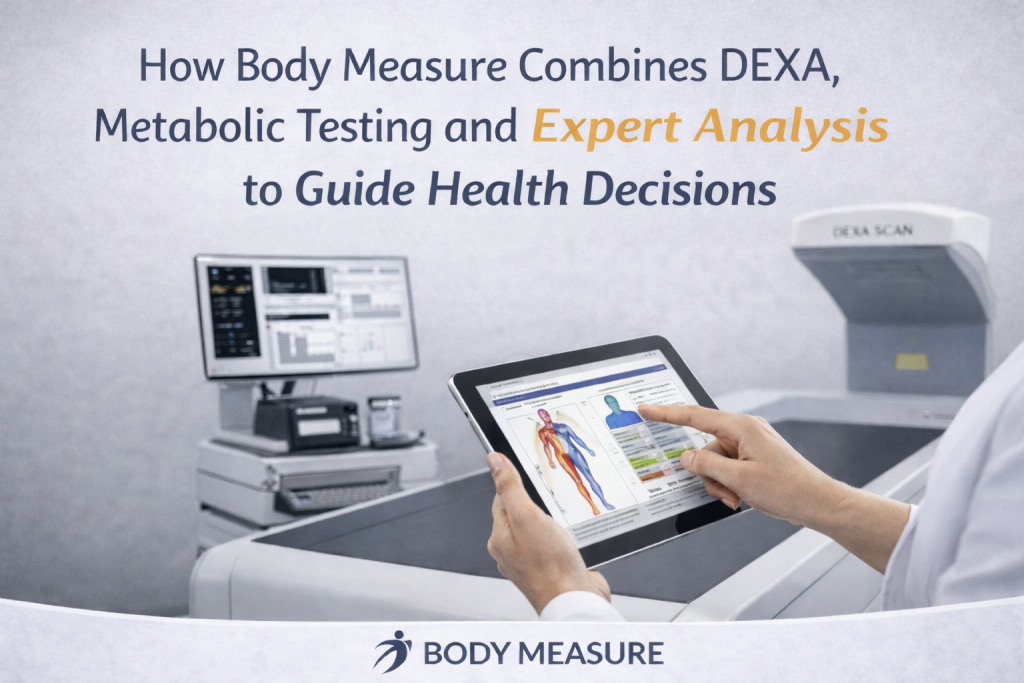
This is where clinical testing becomes valuable. At Body Measure, advanced testing technologies are combined to provide a more complete picture of how the body is structured and how it functions. DEXA scanning provides highly accurate body composition analysis, while metabolic testing measures how the body uses energy at rest.
However, technology alone does not create meaningful insight. The real value comes from expert interpretation. By combining detailed measurements with professional analysis, Body Measure helps translate complex data into clear information that supports informed health decisions and long term progress.
Key Takeaways
- Body Measure combines multiple advanced tests to provide a clearer picture of health.
• DEXA scans measure body composition with high precision.
• Metabolic testing reveals how the body uses energy at rest.
• Expert interpretation helps translate complex data into practical insights.
• Integrated testing allows individuals to track changes and make informed health decisions over time.
Summary Table: Components of the Body Measure Assessment
| Component | What It Measures | Why It Matters |
| DEXA Scan | Fat mass, lean mass, visceral fat and bone mass | Provides highly accurate body composition analysis |
| Metabolic Testing | Resting metabolic rate and energy expenditure | Helps understand how the body uses energy |
| Expert Interpretation | Review of combined test results | Translates measurements into meaningful insights |
| Progress Monitoring | Repeat testing over time | Tracks changes and supports informed decision making |
Why Accurate Health Data Matters
Understanding health and body composition can be challenging when relying on tools that provide only limited or estimated information. Many commonly used methods, such as bathroom scales or smart body composition devices, attempt to estimate fat and muscle levels using indirect calculations. While these tools can sometimes indicate trends, they often lack the accuracy required to provide meaningful insight into how the body is actually changing.
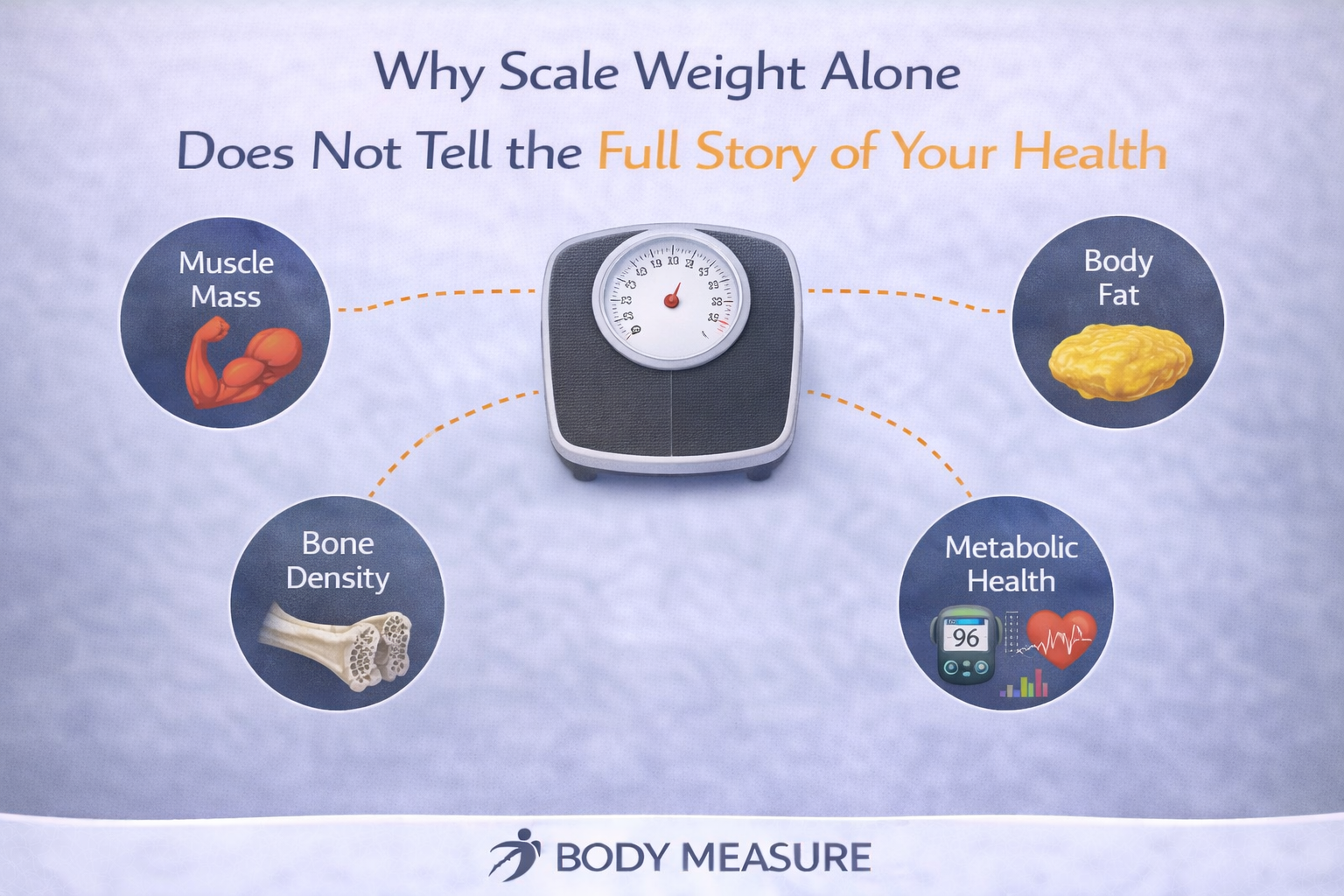
Body weight alone is particularly limited as a health indicator. Changes in weight may reflect shifts in hydration, muscle mass, fat mass or even short term dietary fluctuations. Without knowing what is contributing to these changes, it becomes difficult to interpret whether progress is occurring.
Wearable technology and fitness apps can provide useful information about activity levels and daily habits, but they also rely heavily on predictive algorithms rather than direct measurement. As a result, two individuals with similar data from wearable devices may still have very different underlying body composition and metabolic characteristics.
Clinical testing provides a more reliable foundation for understanding the body. By directly measuring body composition and metabolic function, advanced testing removes much of the guesswork that can accompany health tracking. This level of accuracy allows individuals to interpret their results with greater confidence and make decisions that are better aligned with their personal goals.
The Role of DEXA in Understanding Body Composition
DEXA scanning plays a central role in the Body Measure assessment process because it provides one of the most accurate methods available for analysing body composition. Unlike scales or impedance based devices that estimate fat levels, DEXA technology directly measures different tissue types using dual energy X ray imaging.
A single DEXA scan produces detailed information about fat mass, lean muscle mass, visceral fat and bone mass across the entire body. This allows body composition to be analysed with a high level of precision.
One important advantage of DEXA is its ability to show how fat and muscle are distributed throughout different regions of the body. For example, the scan can reveal differences between the arms, legs and trunk, as well as the amount of visceral fat stored around internal organs. These patterns can provide valuable context when evaluating metabolic health and physical performance.
DEXA scans are also highly consistent when repeated over time. This makes them particularly useful for tracking changes in body composition during training programs, lifestyle adjustments or long term health monitoring.
By providing an accurate baseline and the ability to measure change over time, DEXA forms the foundation of the data used by Body Measure experts to better understand each individual’s physiology.
How Metabolic Testing Adds Another Layer of Insight
While body composition reveals how the body is structured, metabolic testing helps explain how the body functions. Specifically, metabolic testing measures resting metabolic rate, which represents the number of calories the body burns at rest to support essential physiological processes such as breathing, circulation and cellular repair.
Many people rely on online calorie calculators or fitness apps to estimate their metabolic rate. These tools use population averages based on factors such as age, height, weight and gender. While they can provide a rough estimate, they do not account for the natural variation that exists between individuals.
In reality, two people with similar body composition may have significantly different metabolic rates. Factors such as muscle mass, hormonal influences, training history and genetics can all influence how efficiently the body uses energy.
Metabolic testing provides a direct measurement of resting metabolic rate by analysing oxygen consumption and carbon dioxide production during a controlled breathing assessment. This allows individuals to understand how many calories their body actually burns at rest rather than relying on estimated values.
When metabolic testing is combined with DEXA body composition analysis, it provides a more complete picture of health. Body composition reveals the structure of the body, while metabolic testing helps explain how that structure influences energy use.
Why Expert Interpretation Is Essential
Advanced testing technologies generate detailed information, but the raw data alone does not always provide clear answers. DEXA reports and metabolic test results contain multiple measurements that can be difficult to interpret without experience in analysing body composition patterns.
For example, body fat percentage may be one of the first numbers people look at, yet it rarely tells the full story. Fat distribution, lean muscle balance and changes between scans can all influence how results should be interpreted.
Similarly, metabolic testing results must be considered in context. A resting metabolic rate measurement may appear higher or lower than expected depending on factors such as muscle mass, training habits and lifestyle patterns.
At Body Measure, experienced professionals review these measurements together to build a more complete understanding of each client’s results. Rather than focusing on isolated numbers, the team looks for patterns across the data and how those patterns may relate to an individual’s health goals.
This process helps transform complex measurements into insights that are easier to understand. When results are explained clearly and placed in the right context, individuals are better equipped to make informed decisions about training, nutrition and long term health strategies.
Turning Data Into Informed Health Decisions
Once body composition and metabolic data have been analysed together, the next step is understanding how those insights can support better health decisions. Accurate measurements provide a foundation for interpreting how the body is responding to training, nutrition and lifestyle habits.
For many individuals, this process begins with establishing a clear baseline. A DEXA scan reveals how fat mass, lean muscle mass and visceral fat are distributed throughout the body, while metabolic testing provides insight into how the body uses energy at rest. Together, these measurements help explain patterns that may not be obvious through body weight or general fitness tracking alone.
With this information, individuals can approach their health strategies with greater clarity. For example, someone working toward body composition goals may be able to track whether changes in training or nutrition are influencing fat mass or lean muscle development over time. Others may be interested in understanding how their metabolic rate compares with common estimates and how this may influence their overall energy needs.
The purpose of this integrated approach is not to prescribe a one size fits all program, but to provide objective information that helps individuals make informed choices. When accurate measurements are available, health decisions can be guided by data rather than assumptions.
Over time, this process helps build a clearer understanding of how the body responds to different strategies, supporting a more sustainable approach to long term health and performance.
How Integrated Testing Supports Long Term Health Monitoring
Health and body composition are not static. They change gradually in response to lifestyle habits, physical activity, ageing and environmental factors. Because of this, a single assessment provides only a snapshot in time. Ongoing monitoring allows these changes to be observed more clearly.
Integrated testing at Body Measure supports this long term perspective. By repeating DEXA scans and metabolic assessments at appropriate intervals, individuals can track how their body composition and metabolic function evolve over time.
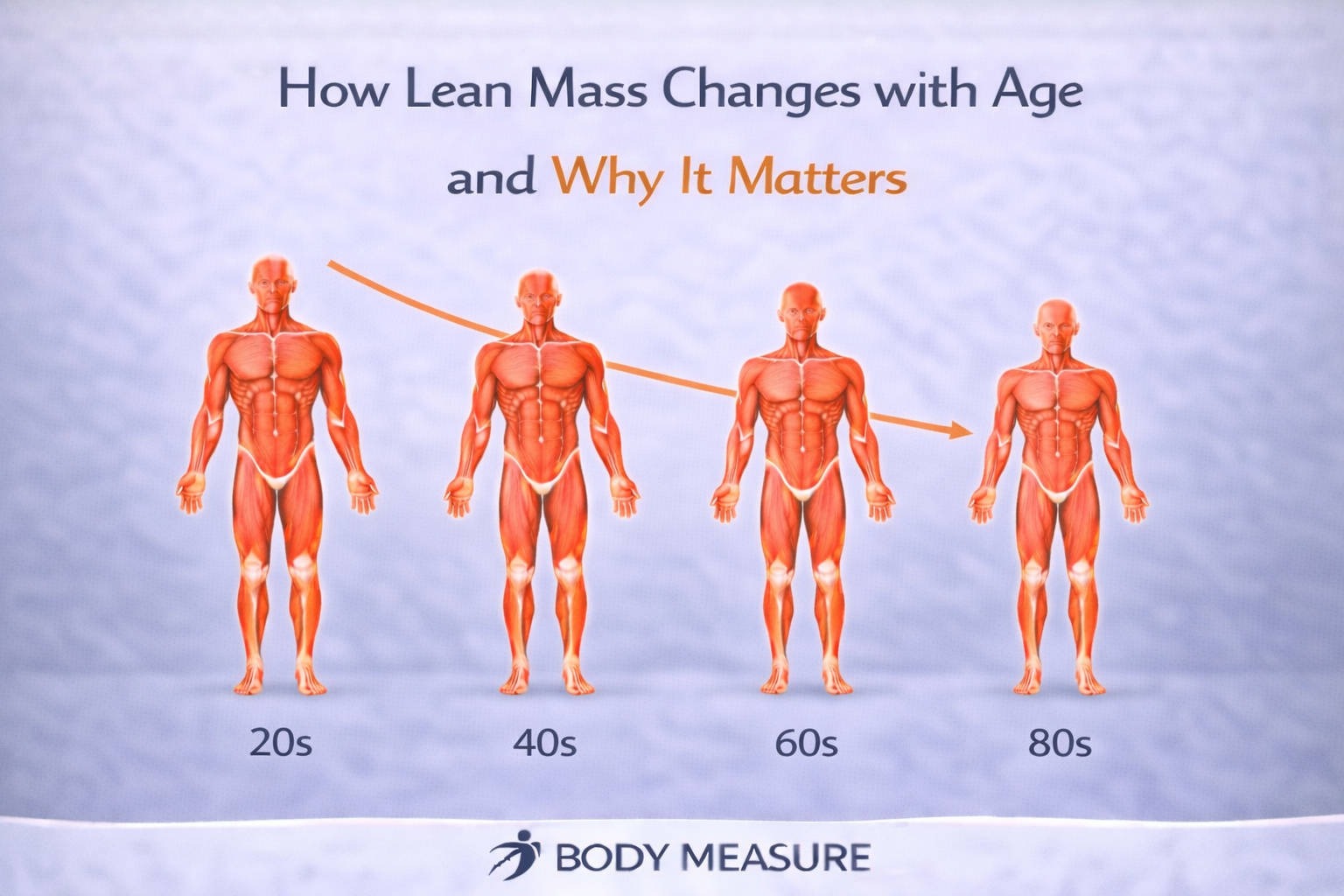
This can be particularly useful for those following structured training programs, adjusting nutrition strategies or focusing on long term health improvements. Changes that might not be visible through body weight alone can often be detected through shifts in lean muscle mass, fat distribution or metabolic rate.
Monitoring trends across multiple assessments also helps provide context. Rather than focusing on short term fluctuations, individuals can observe broader patterns that reveal whether their strategies are producing the results they expect.
Over time, this ongoing feedback helps create a clearer understanding of personal physiology and supports a more informed approach to maintaining health and performance.
Final Thoughts
Understanding health requires more than a single measurement. Body composition, metabolism and long term lifestyle patterns all contribute to how the body functions and adapts over time.
At Body Measure, advanced testing technologies are used together to provide a more complete understanding of these factors. DEXA scanning offers highly accurate body composition analysis, while metabolic testing reveals how the body uses energy at rest. When these measurements are combined with expert interpretation, they create a clearer picture of an individual’s physiology.
This integrated approach helps transform complex data into meaningful insight. Rather than relying on assumptions or general estimates, individuals can view their health through precise measurements and informed analysis.
For many clients, this combination of technology and expertise provides the clarity needed to better understand their body and track meaningful progress over time.
FAQs Answered
What tests are included in a Body Measure assessment?
Body Measure assessments may include advanced testing such as DEXA body composition scans and metabolic testing. A DEXA scan measures fat mass, lean muscle mass, visceral fat and bone mass, while metabolic testing measures resting metabolic rate and how the body uses energy.
Together, these tests provide a more complete understanding of both body structure and metabolic function.
Do I need both metabolic testing and a DEXA scan?
DEXA scanning and metabolic testing measure different aspects of health. A DEXA scan focuses on body composition, while metabolic testing measures how efficiently the body uses energy at rest.
When combined, these assessments provide complementary insights that help individuals understand both the structure of their body and how it functions metabolically.
How accurate is metabolic testing compared with calorie calculators?
Online calorie calculators estimate metabolic rate using population averages based on factors such as age, weight and height. While these estimates can provide a rough guideline, they do not account for individual differences in metabolism.
Metabolic testing measures oxygen consumption and energy use directly, providing a more personalised and accurate assessment of resting metabolic rate.
How do Body Measure experts interpret my results?
Body Measure professionals review DEXA scan results and metabolic testing data together to identify patterns and provide context. Rather than focusing on individual numbers alone, the results are interpreted in relation to body composition distribution, metabolic rate and overall trends over time.
This helps clients better understand what their measurements mean and how they may relate to their health goals.
Where can I get DEXA and metabolic testing together in Sydney?
Integrated body composition and metabolic testing is available through specialised clinics that focus on advanced health assessments. In Sydney, Body Measure provides DEXA scanning and metabolic testing designed to offer accurate, repeatable measurements for individuals interested in tracking their health and body composition.
How often should integrated testing be repeated?
For most individuals, repeating DEXA scans and metabolic testing every 8 to 12 weeks allows enough time for meaningful changes in body composition and metabolic function to occur.
This timeframe helps ensure that results reflect genuine physiological changes rather than normal short term variation.