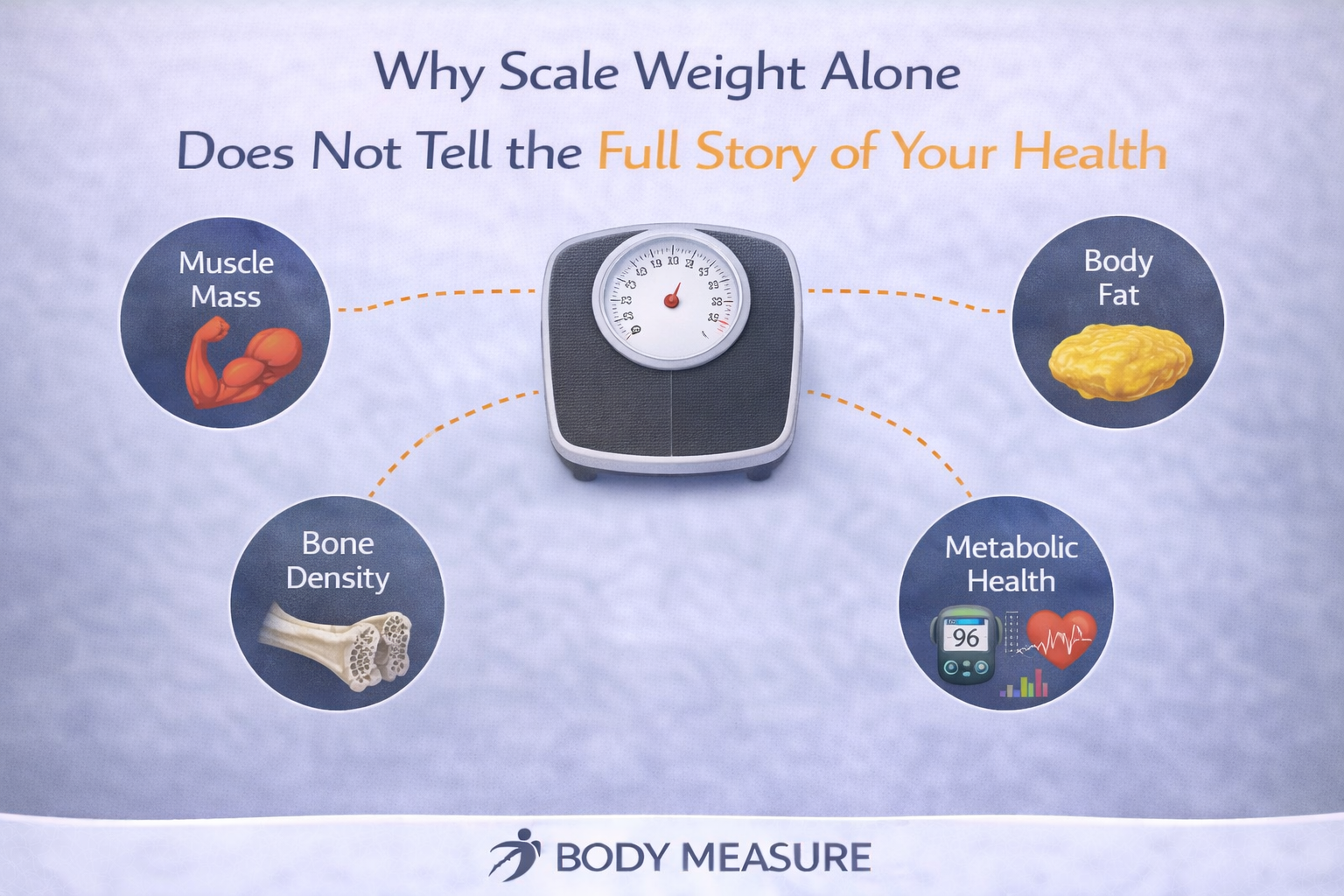
Tracking your health or fitness progress requires more than watching the number on the scale. Two people can weigh the same but have completely different levels of fat, muscle and bone mass. This is why body composition testing has become so important. Yet with multiple testing methods available, it can be difficult to know which one provides the most reliable information.
BMI, BIA scales and skinfold callipers are commonly used because they are quick and accessible, but their accuracy varies greatly. Some methods can be influenced by hydration, recent meals, technician skill or even the weather. In contrast, DEXA scanning offers a precise, medically validated measurement of fat mass, lean mass and bone mass, making it the preferred choice for anyone seeking accuracy and detail.
In this article, we compare the four main methods used to measure body composition, explain what each test actually measures, and help you understand which option is best for your goals. By the end, you’ll have a clear understanding of the strengths and limitations of each method, and why accuracy matters when making decisions about your health and fitness.
KEY TAKEAWAYS
- Body composition tests vary widely in accuracy, from simple estimates to medical-grade precision.
- DEXA measures fat, lean mass, bone mass and visceral fat, offering the most detailed and reliable data.
- BMI is a population screening tool and does not distinguish between body fat or muscle.
- BIA scales can be influenced by hydration, food intake and other external factors, reducing accuracy.
Skinfold callipers measure subcutaneous fat only and depend heavily on technician skill. - For accurate tracking and informed decision-making, DEXA is the most reliable option.
SUMMARY TABLE
| Method | What It Measures | Accuracy Level | Limitations | Best For |
| DEXA | Fat mass, lean mass, bone mass, visceral fat | Very high | Access and cost | Accurate tracking and detailed health insights |
| BMI | Height-to-weight ratio only | Very low | Does not measure fat or muscle; misclassifies many individuals | Large population screening, not personal assessment |
| BIA | Electrical impedance estimation of fat and lean mass | Low to moderate | Affected by hydration, food, exercise and temperature | General trends when precision is not required |
| Skinfolds | Subcutaneous fat at selected sites | Moderate | Technician skill dependent; does not measure visceral fat or muscle | Gym settings, field testing, basic progress checks |
Why Accuracy Matters in Body Composition Testing
Accurate body composition testing is essential because it determines how you interpret your progress and make decisions about your health. Many people rely solely on body weight to judge whether they are getting fitter or healthier, but weight alone cannot tell you whether you are losing fat, gaining muscle or maintaining vital bone mass. Two people with the same weight can have dramatically different levels of health, performance and metabolic risk.
Accurate measurements help you understand what is changing inside your body. For example, during a fat-loss program, the goal is to reduce fat while maintaining or increasing muscle mass. Without precise data, it is easy to assume progress is occurring when it may not be, or to overlook positive changes that do not show up on the scale.
Similarly, for individuals tracking long-term health, understanding visceral fat levels and bone mass can provide early insights into metabolic risk and skeletal health. These markers cannot be accurately assessed through basic tools such as BMI or BIA.
When accuracy is lacking, people often make decisions based on incomplete or misleading information. This can lead to ineffective training plans, inappropriate nutritional strategies or unnecessary frustration. Choosing a reliable method of body composition testing ensures your decisions are based on measurable changes, not guesswork.
What Each Method Actually Measures
Understanding the differences between DEXA, BMI, BIA and skinfold callipers begins with recognising what each method is actually capable of measuring. While all four are used to assess body composition in some way, their underlying methodologies vary significantly. This affects not only what they measure, but how accurate and meaningful their results are.
DEXA (Dual-Energy X-Ray Absorptiometry)
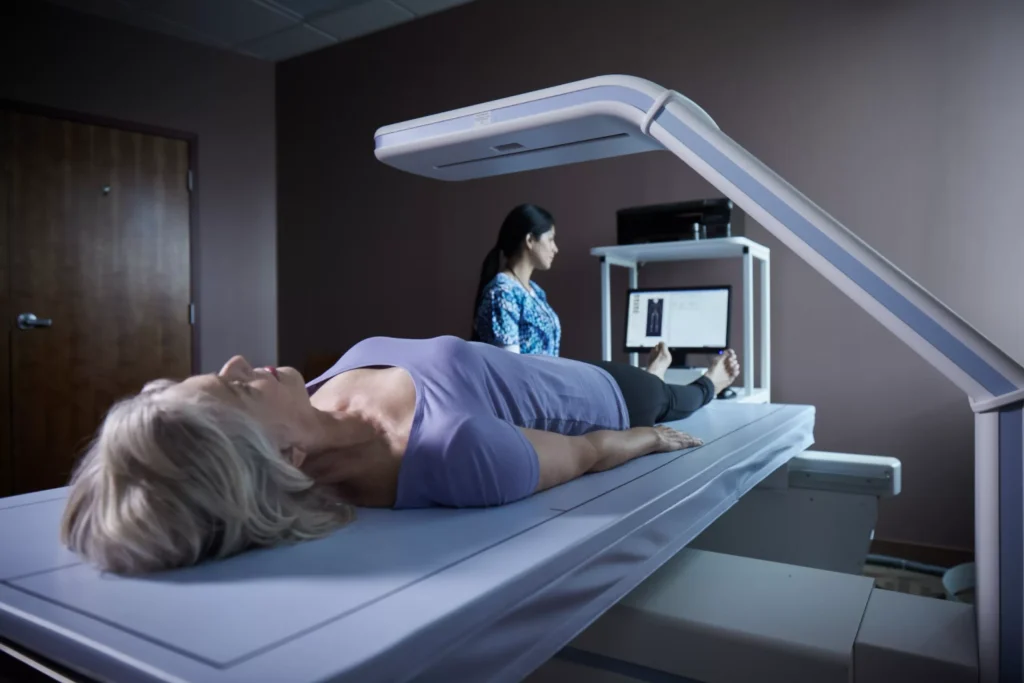
DEXA uses two low-dose X-ray beams to distinguish between fat mass, lean mass and bone mass. It measures each of these components directly, allowing for exceptionally precise body composition data. DEXA also provides regional analysis and quantifies visceral fat, offering insights into health risks and muscle symmetry that cannot be captured by other methods.
BMI (Body Mass Index)
BMI is not a body composition test. It is a simple calculation that uses height and weight to categorise individuals into ranges such as underweight, normal weight, overweight or obese. BMI does not measure fat, muscle or bone. It cannot differentiate between a highly trained athlete with substantial muscle mass and an individual carrying excess body fat. While useful at a population level, it lacks meaningful insight for personal health assessment.
BIA (Bioelectrical Impedance Analysis)

BIA devices send a mild electrical current through the body and estimate body composition based on how quickly or slowly the current travels. Because muscle contains more water than fat, it conducts electricity more efficiently. However, these readings are influenced by hydration levels, food intake, exercise, ambient temperature and menstrual cycles. As a result, BIA does not measure body composition directly; it estimates it through formulas that can vary widely.
Skinfold Callipers
Skinfold testing involves measuring the thickness of subcutaneous fat at specific sites on the body. These measurements are entered into a formula to estimate total body fat percentage. While the method can be reasonably accurate under controlled conditions, results depend heavily on the skill of the technician and the consistency of the measurement sites. Skinfolds do not assess visceral fat, bone density or muscle mass and may become less accurate for individuals with higher body fat.
DEXA – The Most Accurate and Complete Assessment
DEXA is widely recognised as the most precise and comprehensive method for assessing body composition. Its accuracy is grounded in clinical science rather than prediction formulas or manual measurements, making it the preferred choice in medical settings, research environments and high-performance sport.
Direct Measurement Using Dual-Energy X-Ray Technology
Unlike BMI, BIA or skinfolds, DEXA does not estimate body composition. It measures how different tissues absorb low-dose X-ray beams, allowing it to distinguish fat mass, lean mass and bone mass with exceptional clarity. Because the data comes from direct measurement rather than assumptions, DEXA provides a level of accuracy that other methods cannot replicate.
Detailed Breakdown of Fat, Muscle and Bone
DEXA offers insights beyond a single body fat percentage. It provides:
- Total fat mass and body fat percentage
- Lean muscle mass across the entire body
- Regional muscle distribution and left–right symmetry
- Bone mass
- Visceral fat levels
This level of detail is invaluable for understanding health, performance and long-term risk factors.
Bone Mass vs Bone Mineral Density (BMD)
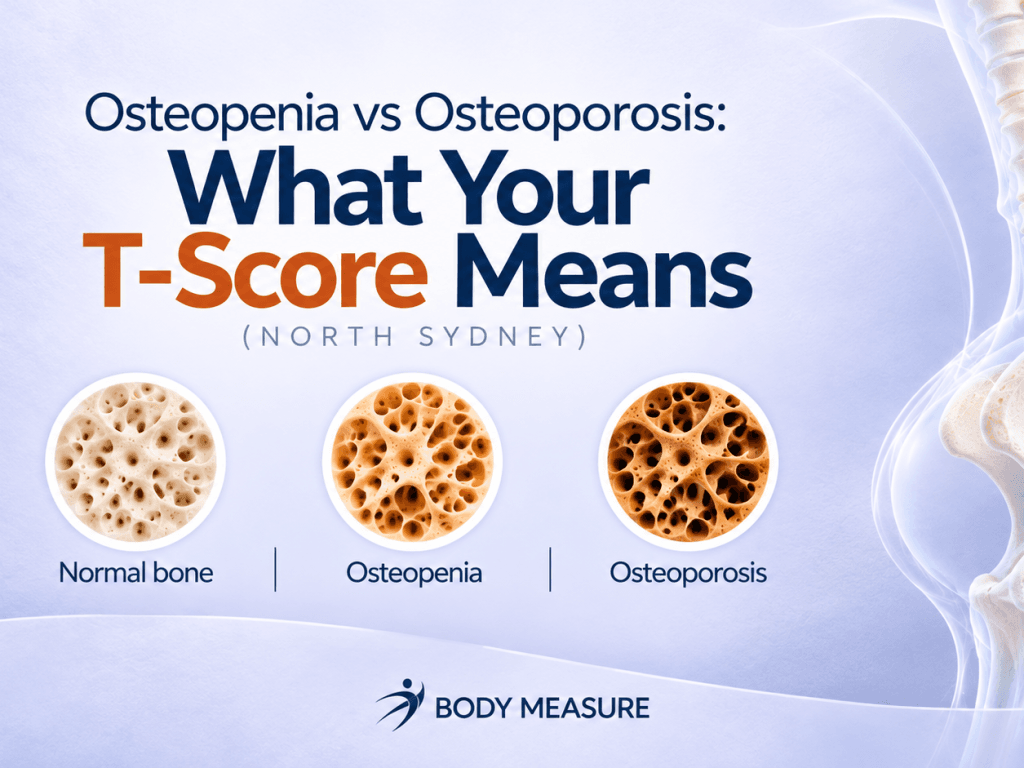
It is important to distinguish between bone mass and Bone Mineral Density (BMD), as these terms are often confused. A DEXA body composition scan measures bone mass, which reflects the total amount of bone tissue and contributes to understanding overall body composition. However, bone mass alone does not assess bone strength or diagnose conditions such as osteopenia or osteoporosis.
To clinically assess bone strength and fracture risk, a Bone Mineral Density (BMD) exam is required. This uses the same DEXA machine but involves separate medical software and a different examination protocol, with results reported by a Radiologist. For the most comprehensive insight, individuals may choose both a DEXA body composition scan and a BMD exam, providing a complete body composition profile alongside a medical bone density assessment.
Consistency and Repeatability
One of the strongest advantages of DEXA is how reliably it tracks change over time. Environmental variables that affect other methods—hydration, temperature, technician technique—have minimal influence on DEXA results. This consistency makes it ideal for monitoring fat loss, muscle gain and bone health with confidence.
Clinical Validation
DEXA has long been used in hospitals and medical facilities to assess Bone Mineral Density (BMD), a critical indicator of osteoporosis and fracture risk. Using the same underlying technology, DEXA is also used for body composition analysis, where it measures fat mass, lean mass and bone mass. Its reliability across clinical, research and athletic environments reinforces its reputation as the gold standard when the correct scan type is used for the correct purpose.
Visceral Fat Measurement
Few body composition tools can measure visceral fat accurately. DEXA provides a clear estimate of this internal fat around the organs, offering valuable insight into metabolic health. This makes it an important tool for individuals monitoring risk factors such as insulin resistance or cardiovascular disease.
Taken together, these strengths make DEXA the most accurate and actionable assessment available, providing clarity that cannot be achieved with BMI, BIA or skinfold methods.
Limitations of BMI, BIA and Skinfolds
While BMI, BIA and skinfold callipers are widely used, each method has important limitations that can affect accuracy and interpretation. Understanding these limitations is essential when deciding which test is appropriate for tracking your progress or assessing your health.
BMI (Body Mass Index)
BMI is often misunderstood as a body fat measurement, but it is simply a ratio of height to weight. Its limitations include:
- It cannot differentiate between muscle, fat and bone.
A muscular athlete may be classified as overweight or obese despite having low body fat.
- It does not assess fat distribution.
BMI cannot indicate whether fat is stored around the abdomen or hips, which have different health implications.
- It offers little value for individual assessment.
BMI is useful for population studies, but for personal health, it lacks meaningful insight.
BIA (Bioelectrical Impedance Analysis)
BIA is more sophisticated than BMI, but still has significant constraints:
- Results can vary widely based on hydration levels.
Being dehydrated, overhydrated, or having consumed food or caffeine can change readings.
- Environmental factors influence measurements.
Temperature, exercise and menstrual cycle can alter impedance results.
- It uses predictive equations rather than direct measurement.
This means accuracy depends on how well the formula fits the individual’s age, sex, body type and ethnicity.
- Limited ability to assess visceral fat.
Some devices estimate visceral fat, but these values are not clinically precise.
BIA can show general trends but should not be relied on for precise tracking.
Skinfold Callipers
Skinfold testing has been used for decades, but accuracy depends on strict technique:
- Measurements are affected by technician skill.
Small differences in pinch technique or site location can significantly change results.
- Only subcutaneous fat is measured.
Skinfolds cannot assess visceral fat, muscle mass or bone density.
- Less accurate for individuals with higher body fat.
Pinches can be difficult to obtain consistently, reducing reliability.
- Data relies on formulas developed for specific populations.
Results may not generalise well across different ages, body types or ethnicities.
While skinfolds can be useful in controlled environments, they lack the precision needed for detailed health or performance monitoring.
Which Body Composition Test Should You Choose?
Choosing the right body composition test depends on your goals, the level of accuracy you need and how you plan to use the information. Each method has a place, but they are not equal in reliability or detail. Understanding when each tool is appropriate will help you make an informed decision.
When DEXA Is the Best Choice
DEXA is ideal for anyone who wants accurate and comprehensive information about their body composition. It is the preferred option for:
- Fat-loss and muscle-gain tracking
- Visceral fat assessment
- Monitoring bone mass
- Identifying muscle imbalances
- Supporting long-term health planning
- Athletes requiring precise performance insights
Because DEXA measures fat, lean mass directly, it offers the clearest picture of what is actually happening inside the body. It is also the most reliable tool for comparing scans over time, making it the best option for structured health or fitness programs.
When BIA May Be Sufficient
BIA devices are convenient and accessible, making them suitable for:
- Quick, general trends in body fat and lean mass
- Situations where precision is not essential
- Home monitoring as long as the user follows consistent testing conditions
However, BIA should not be used to make detailed training, nutrition or medical decisions, as fluctuations caused by hydration and other variables can obscure real progress.
When Skinfolds Can Be Useful
Skinfold callipers may be appropriate in:
- Gym or sports settings where a trained technician performs the test
- Short-term progress tracking within controlled environments
- Field testing scenarios where DEXA is not available
Despite these advantages, skinfolds are limited by technique variability and do not assess visceral fat.
Why BMI Should Not Be Used for Personal Body Composition Goals
BMI is primarily a screening tool for large populations. It provides a general indication of weight categories but does not offer meaningful insight into body fat, muscle or health risk for individuals. Relying on BMI alone can lead to misinterpretation and poor decision-making.
The Best Approach for Meaningful Tracking
For most people seeking accurate, consistent and actionable data, DEXA offers the highest level of precision. It provides detailed insights that can guide training, nutrition and health strategies with confidence. While other methods may serve specific purposes, they cannot replace the comprehensive view that DEXA provides.
FINAL THOUGHTS
Choosing the right body composition test can significantly influence how you understand your health, track your progress and set realistic goals. While BMI, BIA and skinfold callipers have their place, they each come with limitations that make them less reliable for detailed or long-term assessment. For individuals who want clear, precise and clinically meaningful data, DEXA remains the most accurate method available.
By measuring fat mass, lean muscle bone mass, directly, DEXA provides insights that other tests simply cannot capture. Whether you are working toward fat loss, building muscle, improving metabolic health or monitoring bone strength, accurate data allows you to make informed decisions and stay on the right path.
Understanding your body is the first step toward improving it. With the right assessment tools, you can track changes confidently and build a plan that genuinely supports your goals.
FAQs Answered:
Where can I get a DEXA scan in Sydney?
In Sydney, DEXA scans are available through specialised body composition clinics, medical imaging centres and performance-focused assessment facilities. Body Measure offers professional DEXA scanning in Sydney using medical-grade equipment and trained technicians. Appointments are available without a referral, and each scan includes a detailed breakdown of fat mass, lean tissue, bone mass and visceral fat.
How much does a DEXA scan cost privately?
Private DEXA scan pricing in Australia varies depending on the provider, the type of scan and whether it includes professional interpretation. At Body Measure, pricing is kept transparent and accessible:
- Initial DEXA body composition scan: AUD $160
- Return DEXA scans: AUD $99
These scans provide detailed insights into fat mass, lean mass, bone mass and visceral fat using medical-grade DEXA technology. Compared to general market pricing, which can range higher depending on location and provider, Body Measure offers a cost-effective option for individuals who want accurate, repeatable body composition data without ongoing high fees.
Are DEXA scans covered by Medicare in Australia?
Medicare may cover 100 percent of the fee for eligible Bone Mineral Density (BMD) DEXA scans, but only when the patient meets specific medical conditions or risk factors outlined by Medicare.
Do I need a referral for a DEXA scan in Australia?
For body composition DEXA scans, no referral is required. You can book directly with a clinic such as Body Measure.
For NON Medicare-rebated bone density scans, no referral is required.
For Medicare-rebated bone density scans, a referral from a GP or specialist is required because eligibility depends on clinical criteria.
Does Medicare pay 100 per cent of a DEXA scan?
Medicare may cover 100 per cent of the fee for eligible Bone Mineral Density (BMD) DEXA scans, but only when specific medical conditions or risk factors are met, such as monitoring osteoporosis or assessing fracture risk. These scans require a referral from a GP or specialist and are reported by a Radiologist.
Medicare does not cover body composition DEXA scans, which measure fat mass, lean mass and bone mass for fitness, fat-loss tracking or general health assessment. Body composition scans are paid for privately.
Are DEXA scans worth the money?
For individuals seeking accurate, clinically validated insights into their body composition, DEXA scans provide exceptional value. They measure fat mass, muscle mass, bone mass and visceral fat with far greater precision than BMI, BIA scales or skinfold callipers. The detailed data helps guide training, nutrition and long-term health decisions, making DEXA one of the most informative diagnostic tools available to the general public.