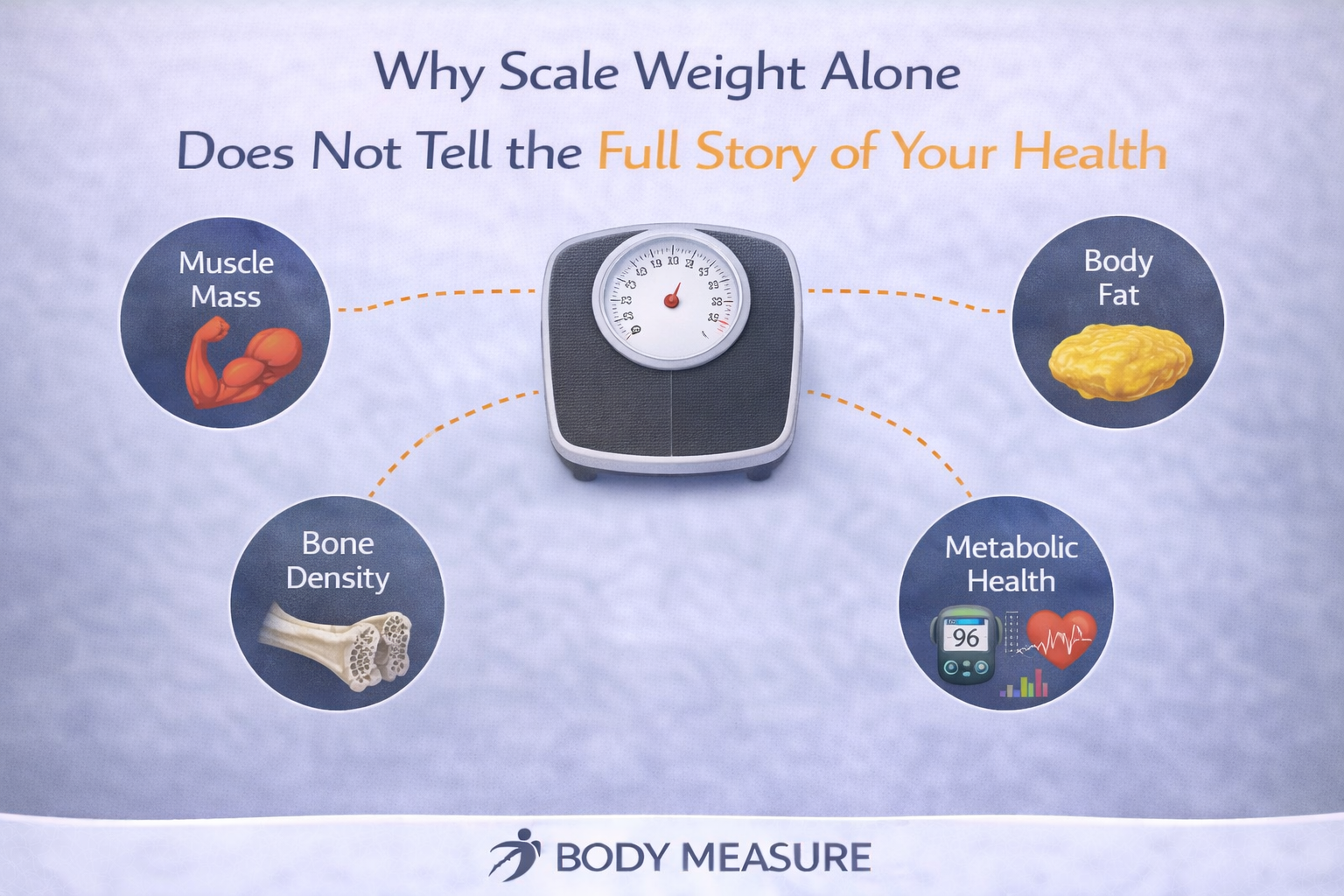
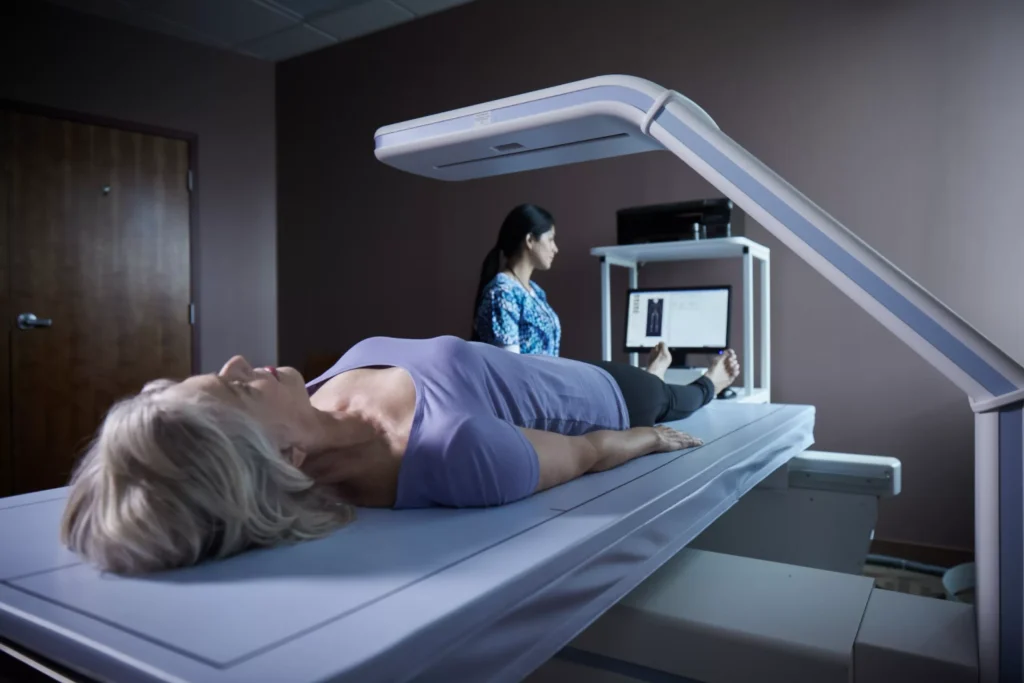
When it comes to measuring body composition, DEXA vs BMI is one of the most common comparisons people search for — and the results might surprise you.
No referral needed | Sydney St Leonards
At a glance: accuracy by method
A quick visual read on what each test can and can’t tell you, before the full breakdown below.
MOST ACCURATE
DEXA
Fat, lean mass, bone mass & visceral fat measured directly.
Skinfolds
Subcutaneous fat only. Depends heavily on technician skill.
BIA
Affected by hydration, food intake, temperature.
BMI
Height-to-weight only; no fat, muscle or bone data
CURIOUS WHERE YOU ACTUALLY STAND?
Skip the guesswork
BMI, BIA and skinfolds can only estimate. A DEXA scan measures your fat, muscle and bone directly, and you’ll walk out with a full report the same day.
From $99 (return) · $160 (first scan)
What each method actually measures
The full picture behind the accuracy scores above.
DEXA Dual-energy X-ray absorptiometry
Uses two low-dose X-ray beams to directly measure fat mass, lean mass and bone mass, plus regional breakdown and visceral fat no estimation formulas involved.
Limitation: Requires an in-clinic appointment.
BIA Bioelectrical impedance analysis
Estimates body composition body composition by sending a mild, undetectable electrical current through the body. Muscle conducts the current faster than fat does, so the speed of conduction is used to estimate fat and lean mass.
It’s a common method in gym-floor scales and handheld devices because it’s fast and doesn’t require specialised equipment.
Limitation: Hydration, food, exercise and temperature can all skew the reading.
Skinfolds Calliper measurement
Measures body fat by pinching a fold of skin and underlying fat at several sites on the body — commonly the abdomen, thigh and triceps — and applying a formula to estimate total body fat percentage.
It’s inexpensive and widely used by trainers and coaches for regular progress tracking between more precise scans.
Limitation: Highly technician-dependent; doesn’t capture visceral fat or muscle.
BMI Height-to-weight ratio
A population screening calculation; not a body composition test. Can’t tell muscle from fat.
Limitation: Regularly misclassifies muscular or lean individuals.
Transparent DEXA pricing in Body Measure | Sydney
No referral needed for a body composition scan, just book and get your full breakdown the same day.
$160
First scan
$99
Return scans
Frequently Asked Questions
The questions people ask most when comparing body composition tests.
In Sydney, DEXA scans are available through specialised body composition clinics, medical imaging centres and performance-focused assessment facilities. Body Measure offers professional DEXA scanning in Sydney using medical-grade equipment and trained technicians. Appointments are available without a referral, and each scan includes a detailed breakdown of fat mass, lean tissue, bone mass and visceral fat.
An initial DEXA body composition scan is $160, with return scans at $99 — both include a full breakdown of fat mass, lean mass, bone mass and visceral fat.
Medicare may cover 100 percent of the fee for eligible Bone Mineral Density (BMD) DEXA scans, but only when the patient meets specific medical conditions or risk factors outlined by Medicare.
No referral is needed for a body composition DEXA scan — you can book directly online.
For anyone who wants precise, repeatable data to guide training or health decisions, yes — DEXA measures directly rather than estimating.
Stop estimating. Start measuring.
Get the most accurate body composition data available, explained clearly, in one appointment.