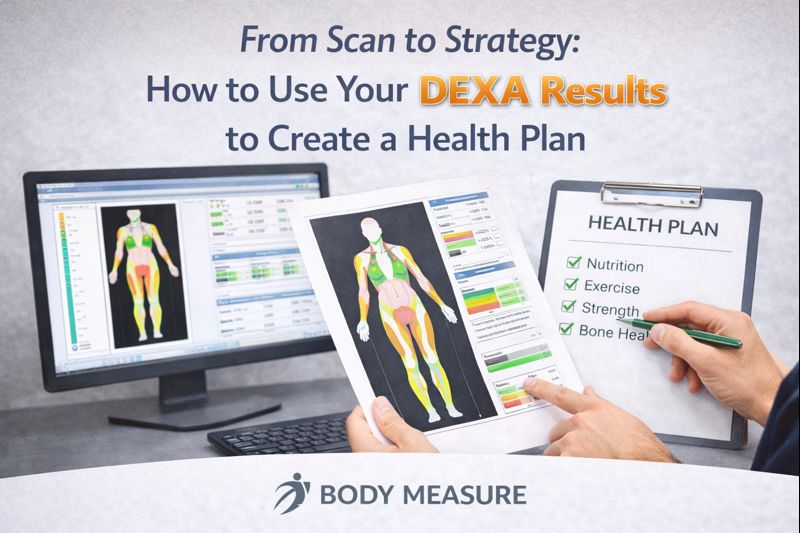
Receiving your DEXA scan results is an important step, but the scan itself is only part of the process. Many people leave with detailed data and a report full of numbers, yet feel unsure about what those results actually mean for their health or what to do next. Without context, even accurate information can feel overwhelming or disconnected from real-world decisions.
DEXA provides objective insight into body composition by measuring fat mass, lean mass and bone mass directly. What it does not do is tell you how to train, eat or live. The value of a DEXA scan lies in how the information is interpreted and applied over time, not in treating the results as a static outcome.
This article explains how to move from scan results to a practical, realistic health plan. It outlines how to understand your DEXA data clearly, identify meaningful priorities, and use repeat scans to guide long-term decisions. Rather than chasing short-term changes, the focus is on using DEXA as a planning and tracking tool that supports informed, sustainable health strategies.
Key Takeaways
- DEXA results provide information, not instructions
- A single scan establishes a baseline, not a final outcome
- Trends over time are more meaningful than individual numbers
- Body composition data should be interpreted in context
- Health plans work best when they are measurable and realistic
- Consistent follow-up scans support informed adjustments
Summary Table: Turning DEXA Results Into Practical Action
| DEXA Measurement | What It Shows | How It Can Inform a Health Plan |
| Fat mass | Amount of body fat and distribution | Monitor fat changes over time without relying on weight |
| Lean mass | Muscle and non-fat tissue | Track muscle maintenance or gain independently of scale weight |
| Regional composition | Distribution across arms, legs and trunk | Identify balance, symmetry and regional changes |
| Visceral fat estimate | Internal abdominal fat | Support awareness of metabolic health trends |
| Bone mass | Mineral content as part of body composition | Observe long-term structural changes, not bone density |
Step One: Understanding Your DEXA Results Clearly
Before using DEXA data to guide any decisions, it is important to understand what the results are actually showing. Misinterpreting the numbers is one of the most common reasons people feel confused or uncertain after a scan.
A DEXA body composition scan measures fat mass, lean mass and bone mass directly. Fat mass refers to the amount of fat tissue in the body, while lean mass includes muscle and other non-fat tissues. Bone mass reflects the mineral content of bone as part of overall body composition, not bone strength or fracture risk.
DEXA also provides regional body composition, breaking these measurements down into areas such as the arms, legs and trunk. This regional view helps show how tissues are distributed rather than relying on whole-body averages. For example, changes in lean mass may occur in the lower body without being obvious in total body numbers.
Some scans also include an estimate of visceral fat, which represents fat stored deep within the abdominal cavity around internal organs. This type of fat is not visible externally and cannot be assessed using weight or BMI alone. DEXA offers a reliable way to monitor visceral fat trends over time rather than relying on assumptions based on appearance.
It is important to distinguish bone mass from Bone Mineral Density (BMD). Bone mass is included in body composition data and reflects mineral content in general terms. A medical BMD DEXA exam is a separate assessment used to evaluate bone health and fracture risk and follows different clinical protocols.
For first-time clients, results should be viewed as a baseline. Without previous scans for comparison, the numbers do not indicate improvement or decline. Their value lies in providing a clear reference point for future scans, allowing real changes to be identified over time.
Understanding what each measurement represents helps place your results in context. When the data is viewed accurately and without judgment, it becomes far easier to use DEXA as a tool for planning rather than a source of uncertainty.
Step Two: Identifying Priorities Without Overreacting
Once you understand what your DEXA results represent, the next step is deciding what actually matters. This is where many people either overreact to a single number or feel unsure about where to focus.
A common mistake is trying to change everything at once. DEXA results can highlight multiple areas, but that does not mean each one requires immediate action. Body composition reflects long-term patterns, and meaningful change occurs gradually rather than all at once.
It is helpful to distinguish between health priorities and aesthetic preferences. For some people, changes in visceral fat or lean mass may be more relevant to long-term health, while others may be focused on tracking performance or recovery. Clarifying what matters most helps prevent reactive decisions based on isolated figures.
Not every difference between scans indicates a problem. Small variations can occur due to normal biological fluctuation rather than true change. This is why trends across multiple scans are far more informative than a single result. A stable measurement over time can be just as meaningful as a visible change.
For first-time scans, priorities should be modest and realistic. Establishing consistency, understanding baseline patterns and planning follow-up scans are often more valuable than setting aggressive short-term targets. This approach supports informed, sustainable progress rather than unnecessary pressure.
By identifying priorities thoughtfully, DEXA data becomes a guide rather than a trigger. This creates space for measured decisions that align with long-term health goals rather than short-term reactions.
Step Three: Using DEXA Data to Inform Lifestyle Decisions
DEXA results are most useful when they help inform everyday decisions rather than dictate rigid rules. The data provides clarity about what is changing in the body, which can support more thoughtful choices around lifestyle without turning numbers into instructions.
Body composition data can help guide training focus at a high level. For example, changes in lean mass over time may indicate whether current training supports muscle maintenance, while regional data can highlight imbalances that may warrant attention. DEXA does not prescribe workouts, but it can help confirm whether training is producing the intended adaptation.
DEXA results can also inform nutrition consistency rather than specific dietary plans. Trends in fat mass or lean mass may reflect whether current eating patterns are broadly supporting goals. Rather than reacting to short-term changes, the emphasis is on recognising long-term patterns that align or conflict with intended outcomes.
Recovery and stress are often overlooked influences on body composition. Unexpected changes or plateaus in lean mass or visceral fat may prompt reflection on sleep, workload and recovery rather than assuming nutrition or training are the only variables. DEXA data can highlight when these factors may be playing a role.
Importantly, DEXA should not be used to micromanage daily behaviour. Body composition adapts slowly, and meaningful insight comes from observing changes over weeks or months. Using the data to support awareness and consistency is far more effective than chasing immediate adjustments.
When applied thoughtfully, DEXA results help align lifestyle decisions with real outcomes. This supports informed planning without turning data into pressure or rigid expectations.
Step Four: Creating a Measurable, Realistic Health Plan
A health plan based on DEXA data works best when it is clear, measurable and realistic. The purpose is not to overhaul everything at once, but to create a framework that allows progress to be observed and adjusted over time.
The first step is defining what you want to monitor, not what you want to change immediately. This might include tracking lean mass stability, observing fat mass trends, or monitoring visceral fat direction across future scans. Clear focus helps prevent scattered or conflicting goals.
Goals should be specific and time-aware. Rather than aiming for vague outcomes such as “improve body composition,” it is more useful to plan for follow-up scans at defined intervals and assess whether measurements are stable, improving or changing unexpectedly. This creates a feedback loop rather than a fixed target.
It is also important to align expectations with how body composition actually changes. Fat loss, muscle gain and internal fat reduction occur gradually. A realistic health plan allows enough time between scans for meaningful change to occur, reducing the risk of misinterpreting short-term variation.
DEXA supports adjustment rather than perfection. If follow-up scans show little change, this does not automatically indicate failure. It may simply confirm that current habits are maintaining stability, which can be an appropriate outcome depending on individual goals and life stage.
By keeping plans grounded in measurement rather than assumption, DEXA becomes a practical reference point. This approach supports steady decision-making and helps ensure health strategies remain adaptable rather than rigid.
Step Five: Using Follow-Up Scans to Adjust Your Strategy
Follow-up DEXA scans are where strategy begins to take shape. While a single scan provides a baseline, repeat scans reveal whether body composition is changing in a meaningful way and whether current approaches are aligned with long-term goals.
Timing matters. Because body composition changes gradually, scans are most useful when spaced appropriately. For many people, repeating a DEXA scan every 8 to 12 weeks allows enough time for genuine changes to occur without over-interpreting short-term fluctuation. Shorter intervals may highlight normal variability rather than true adaptation.
When comparing scans, the focus should be on direction and pattern, not isolated numbers. A gradual trend in fat mass, lean mass or visceral fat is more informative than small changes between individual scans. Stability can also be a positive outcome, particularly during periods of high stress, recovery or life transitions.
Follow-up scans can help identify when adjustments may be needed. For example, unexpected lean mass loss may prompt reflection on training load or recovery, while limited change in fat mass may suggest reviewing consistency rather than intensity. DEXA data supports informed reflection rather than reactive decisions.
It is also important to recognise when no change is the appropriate result. Maintaining body composition over time can be a valid and healthy outcome, particularly as circumstances evolve. DEXA helps confirm this stability objectively rather than relying on assumption.
By using follow-up scans as checkpoints rather than evaluations, DEXA becomes a planning tool. This approach supports steady, evidence-based decisions that adapt to real outcomes rather than expectations.
Common Mistakes When Turning DEXA Results Into a Plan
One of the most common mistakes people make is treating DEXA results as instructions rather than information. DEXA provides accurate data, but it does not prescribe specific actions. Expecting the scan to dictate exact changes in training, diet or lifestyle can lead to frustration or over-adjustment.
Another frequent issue is reacting too quickly to small changes. Body composition fluctuates naturally, and minor differences between scans do not always represent meaningful change. Adjusting plans based on short-term variation can interrupt consistency and make progress harder to interpret.
Comparing results to other people is also misleading. Body composition is influenced by genetics, age, training history and lifestyle factors. Using someone else’s numbers as a benchmark can distort priorities and shift focus away from individual health goals.
Some people assume that more frequent scanning will lead to faster results. In reality, scanning too often can increase confusion rather than clarity. Allowing sufficient time between scans supports more reliable trend analysis and reduces the risk of misinterpreting normal variability.
Finally, expecting linear progress can create unnecessary pressure. Health and body composition rarely change in a straight line. Periods of stability, slower progress or temporary plateaus are normal and do not indicate failure.
Avoiding these common mistakes helps ensure DEXA data is used constructively. When interpreted with patience and context, results support informed planning rather than reactive decision-making.
Why DEXA Works Best as a Long-Term Planning Tool
DEXA is most effective when used as part of an ongoing process rather than a one-off check. Body composition reflects cumulative influences over time, and meaningful insight comes from observing how measurements change under consistent conditions.
One of the strengths of DEXA is its repeatability. When scans are performed using the same equipment and protocols, differences between results are far more likely to reflect true physiological change rather than measurement variability. This consistency is essential for long-term planning.
Using the same clinic for follow-up scans further improves reliability. Consistent positioning, scanning procedures and reporting allow trends to be interpreted with greater confidence. This makes it easier to assess whether changes align with expectations or require adjustments.
DEXA also supports realistic planning by highlighting stability as well as change. Maintaining lean mass, fat mass or visceral fat levels over time can be a positive outcome, particularly during periods where lifestyle demands fluctuate. Without objective data, this stability is often underestimated or overlooked.
By providing clear, comparable data across time, DEXA helps shift focus away from short-term outcomes and toward sustainable health strategies. When used consistently, it becomes a reference point that supports informed decisions rather than guesswork.
Final Thoughts
DEXA scanning provides accurate, objective insight into body composition, but its real value lies in how the information is used over time. When results are viewed as part of a broader process rather than an outcome, they support clearer thinking and more informed decision-making.
Moving from scan to strategy involves understanding the data, identifying realistic priorities and allowing enough time for meaningful change to occur. DEXA does not replace healthy habits or professional guidance, but it removes uncertainty by showing what is actually happening inside the body.
By focusing on trends rather than isolated numbers, DEXA becomes a practical planning tool rather than a source of pressure. Used consistently, it helps confirm whether current approaches are supporting long-term health and allows adjustments to be made with confidence rather than assumption.
For those seeking clarity and structure in their health planning, DEXA offers a reliable reference point. When paired with patience and context, it supports steady progress and informed choices over time.
FAQs Answered
How do I use my DEXA results to improve my health?
DEXA results are best used as objective information rather than instructions. They provide clarity about your current body composition, including fat mass, lean mass and distribution, which helps identify patterns over time. By using DEXA as a baseline and tracking changes across repeat scans, you can make more informed decisions about whether your current lifestyle habits are supporting your health goals.
Should I change my training or diet after a DEXA scan?
A DEXA scan does not prescribe changes to training or diet. Instead, it provides data that can help guide reflection. If repeat scans show trends that do not align with your goals, this may prompt a review of consistency, recovery or overall approach rather than immediate or drastic changes. Decisions are best made over time, using trends rather than single results.
How often should I repeat a DEXA scan to track my health plan?
Because body composition changes gradually, DEXA scans are typically repeated every 8 to 12 weeks when tracking progress. This allows enough time for meaningful changes to occur and reduces the risk of misinterpreting short-term variation. Longer intervals may also be appropriate depending on individual goals and circumstances.
Can DEXA scans be used for long-term health planning?
Yes. DEXA is particularly valuable for long-term health planning because it provides consistent, repeatable measurements. When scans are performed under similar conditions, changes over time can be tracked reliably. This supports informed planning rather than relying on assumptions based on weight, appearance or short-term changes.
Where can I get consistent DEXA scans in Sydney?
Consistent DEXA scans are best performed at a dedicated clinic that uses standardised equipment and protocols. Body Measure provides DEXA scanning in Sydney with a focus on repeatability, accuracy and clear interpretation, supporting reliable comparison across multiple scans.
Can Body Measure help me track progress over time?
Yes. Body Measure is set up to support ongoing DEXA tracking rather than one-off measurements. By using consistent scanning protocols and equipment, Body Measure allows changes in body composition to be compared accurately over time, helping clients understand trends rather than isolated results.