Not all body fat carries the same health risk. Visceral fat sits deep around your liver, pancreas and intestines. You can’t see it, you can’t pinch it, and your scale and BMI can’t measure it. A DEXA scan can.
KEY TAKEAWAYS
Five things to know about visceral fat
Visceral fat is stored around internal organs and linked to serious health risks.
You can't reliably assess it through weight, BMI or appearance.
People at a normal weight can still have high visceral fat levels.
DEXA provides an objective, non-invasive estimate of visceral fat.
Tracking trends over time supports proactive health decisions.
WHAT IS VISCERAL FAT?
Visceral vs subcutaneous fat
Visceral fat is stored deep in the abdominal cavity, around the liver, pancreas and intestines. Subcutaneous fat sits just under the skin. They behave very differently.
| Feature | Visceral fat | Subcutaneous fat |
|---|---|---|
| Location | Around internal organs | Under the skin |
| Visibility | Not visible externally | Visible and pinchable |
| Health risk | High | Lower |
| Metabolic activity | Highly active | Less active |
| Detection method | DEXA and medical imaging | Skinfolds, visual assessment |
| Response to lifestyle | Diet, training and stress management | Mainly diet and training |
WHY IT MATTERS
Why visceral fat is a serious health risk
It isn’t a passive energy store. It is metabolically active, releasing hormones, inflammatory compounds and fatty acids directly into the bloodstream.
Insulin resistance
Fatty acids and inflammatory compounds drain to the liver through the portal circulation, which can disrupt glucose regulation and raise the risk of type 2 diabetes.
Cardiovascular disease
Higher levels are linked to increased blood pressure, unfavourable cholesterol profiles and chronic low-grade inflammation, raising the risk of heart disease and stroke.
Chronic inflammation
Visceral fat produces pro-inflammatory cytokines that can affect blood vessels, organs and hormonal balance, accelerating metabolic dysfunction.
Hidden risk: these effects happen internally, long before any visible change. That is why being “metabolically unhealthy at a normal weight” often goes undetected until problems appear.
Find out what's inside, not just what shows
A body composition DEXA scan estimates your visceral fat alongside fat, lean and bone mass. Book a scan and get a clear report explained by our team.
From $160 first scan · $99 return scans
THE FALSE REASSURANCE
Why weight, BMI and appearance can't tell you
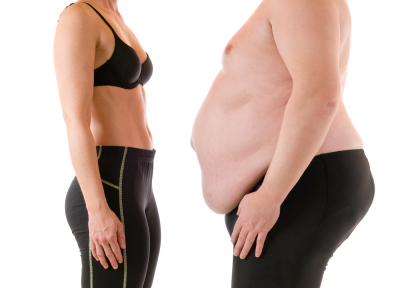
Same scale weight, different inside New
Illustrative only, not real data.
Person A and Person B weigh the same on the scale, but Person B has much more visceral fat on a DEXA scan. Illustrative only.
Body weight
Shows total mass, not how it splits between fat, muscle and bone. You can lose weight and still gain visceral fat.
BMI
Ignores muscle mass, fat distribution and internal fat storage. A "normal" BMI can still hide excess visceral fat.
Appearance
Visceral fat is deep, so people who look slim or athletic can still carry elevated levels.
Tape and skinfolds
These rely on surface or estimated markers and fail to detect internal fat storage.
HOW DEXA MEASURES IT
An estimate based on anatomy, not assumptions
DEXA is one of the few non-invasive methods that can objectively estimate visceral fat, without relying on prediction equations or surface measurements.
Two X-ray energy levels
Low-dose X-ray beams pass through the body at two energy levels, and different tissues absorb them differently.
Tissues are separated
Specialised software separates fat mass, lean mass and bone mass from the scan data.
Abdomen is analysed
The abdominal region is analysed to estimate the visceral fat stored around your organs.
WHO SHOULD BE CONCERNED
Visceral fat isn't limited to one body type
Sedentary lifestyles
Long periods of sitting with little resistance or cardio training raise risk, and exercise doesn’t fully offset prolonged inactivity.
Post-menopausal women
Shifts in oestrogen make central fat storage more likely, even when body weight stays stable.
Chronic stress
Elevated cortisol is strongly linked to increased abdominal fat storage.
Athletes and active people
Poor recovery, little sleep, high stress loads or under-fuelling can all raise visceral fat despite heavy training.
TRACKING OVER TIME
One scan is a snapshot. The trend is the story.
Visceral fat changes over weeks and months, not overnight. For most people, rescanning every 8 to 12 weeks tracks the trend without over-reading short-term variation.
WHAT ACTUALLY WORKS
Reducing visceral fat
It takes a consistent, whole-body approach, not extreme dieting or excessive exercise.
Resistance training
Builds lean muscle, improves insulin sensitivity and raises resting energy use. Add moderate cardio for extra benefit.
Nutrition quality
Whole foods, adequate protein and stable blood sugar beat crash diets, which raise stress hormones.
Sleep
Poor sleep raises cortisol, which is linked to more abdominal and visceral fat.
Stress management
Lower chronic stress can shift visceral fat even when body weight doesn't change.
WHY DEXA
Why DEXA is the gold standard for visceral fat
Objective
It measures physical tissue properties rather than predictive formulas, so it avoids the hydration and body-shape quirks of consumer scanners.
Repeatable
Results are highly repeatable, so changes between scans are more likely to reflect real physiological change than measurement noise.
Non-invasive, very low dose
DEXA uses a very low dose of radiation.
FAQS
Visceral fat questions, answered
What level of visceral fat is considered unhealthy?
There is no single universal cutoff. Higher visceral fat is consistently linked to greater metabolic and cardiovascular risk, so clinicians focus on trends over time. Rising levels suggest increasing risk, and reductions suggest improving metabolic health.
Can you have high visceral fat even if you exercise regularly?
Yes. Chronic stress, poor sleep, inadequate recovery, hormonal changes and nutrition quality can all contribute, which is why some active people carry more visceral fat than they look like they should.
Does visceral fat increase with age?
It tends to, because of hormonal changes, reduced muscle mass and a lower metabolic rate, especially in post-menopausal women and middle-aged men. Resistance training, enough protein and lifestyle management can help slow or reverse this.
Can visceral fat be reduced without significant weight loss?
Yes. It can fall even when weight stays stable, particularly if you gain muscle at the same time. DEXA tracks visceral fat independently of body weight.
Is a DEXA scan the most reliable way to track visceral fat over time?
It is one of the most reliable non-invasive methods. Results are consistent between scans, which supports long-term monitoring.
Where can I get a DEXA scan that measures visceral fat in Sydney?
Body Measure’s St Leonards clinic offers body composition DEXA scans with a visceral fat estimate, no referral needed. First scans are $160 and return scans are $99.
Measure what you can't see.
Book a DEXA scan, get your visceral fat estimate and a full body composition breakdown, and track the trend with real data.