Booking your first DEXA scan is a positive step towards understanding your body composition or bone health in a clear, objective way. However, many people arrive unsure of what to expect, how to prepare, or how their results should be interpreted. This uncertainty can create unnecessary anxiety and, in some cases, lead to inconsistent results if basic preparation guidelines are not followed.
DEXA scanning is different from traditional body measurements or fitness assessments. It uses dual-energy X-ray technology to measure body composition, including fat mass, lean mass and bone mass, or to assess Bone Mineral Density when a medical BMD scan is grading bone health. Because DEXA is highly precise, small factors such as clothing, recent exercise or hydration can influence results if preparation is not consistent.
This article provides a clear, step-by-step checklist to help you prepare for your first DEXA scan. It explains what to do before your appointment, what happens during the scan, and how to approach your results with realistic expectations. Whether your goal is tracking fitness progress, monitoring body composition changes, or establishing a baseline for long-term health, proper preparation helps ensure your DEXA scan delivers accurate and meaningful information.
Key Takeaways
- DEXA scans provide precise body composition data, but preparation affects accuracy
- Consistency before each scan is more important than strict rules
- Clothing, recent exercise and hydration can influence results
- DEXA body composition scans measure fat mass, lean mass and bone mass, not Bone Mineral Density
- Your first scan establishes a baseline rather than a judgment of progress or health
- Results are most meaningful when compared over time under similar conditions
Summary Table: DEXA Scan Preparation at a Glance
| Preparation Step | Why It Matters | What to Do |
| Clothing | Metal and thick fabrics can interfere with scan readings | Wear light clothing with no metal, such as zips, buttons or underwire |
| Exercise | Training affects hydration and muscle glycogen levels | Avoid intense exercise for at least 12 to 24 hours before your scan |
| Food and hydration | Recent meals and fluid intake can influence tissue readings | Eat and drink as you normally would, and avoid large meals immediately before |
| Supplements and metal | Metal objects can distort scan data | Remove jewellery, watches and metal accessories before scanning |
| Medications | Some medications affect hydration or tissue composition | Continue medications as prescribed unless advised otherwise |
| Scan timing | Inconsistent timing can affect repeat comparisons | Book scans at a similar time of day for follow-up visits |
| Expectations | First scans are often over-interpreted | Treat your first scan as a baseline, not an outcome |
What a DEXA Scan Measures (and What It Does Not)
A DEXA body composition scan provides a detailed breakdown of what your body is made of, using dual-energy X-ray technology to measure tissues directly rather than estimating them. This level of precision is what makes DEXA different from scales, BMI calculations or gym-based body composition devices.
A standard DEXA body composition scan measures three key components:
- Fat mass, including total body fat and how it is distributed
- Lean mass, which includes skeletal muscle and other non-fat tissue
- Bone mass, representing the mineral content of bone as part of overall body composition
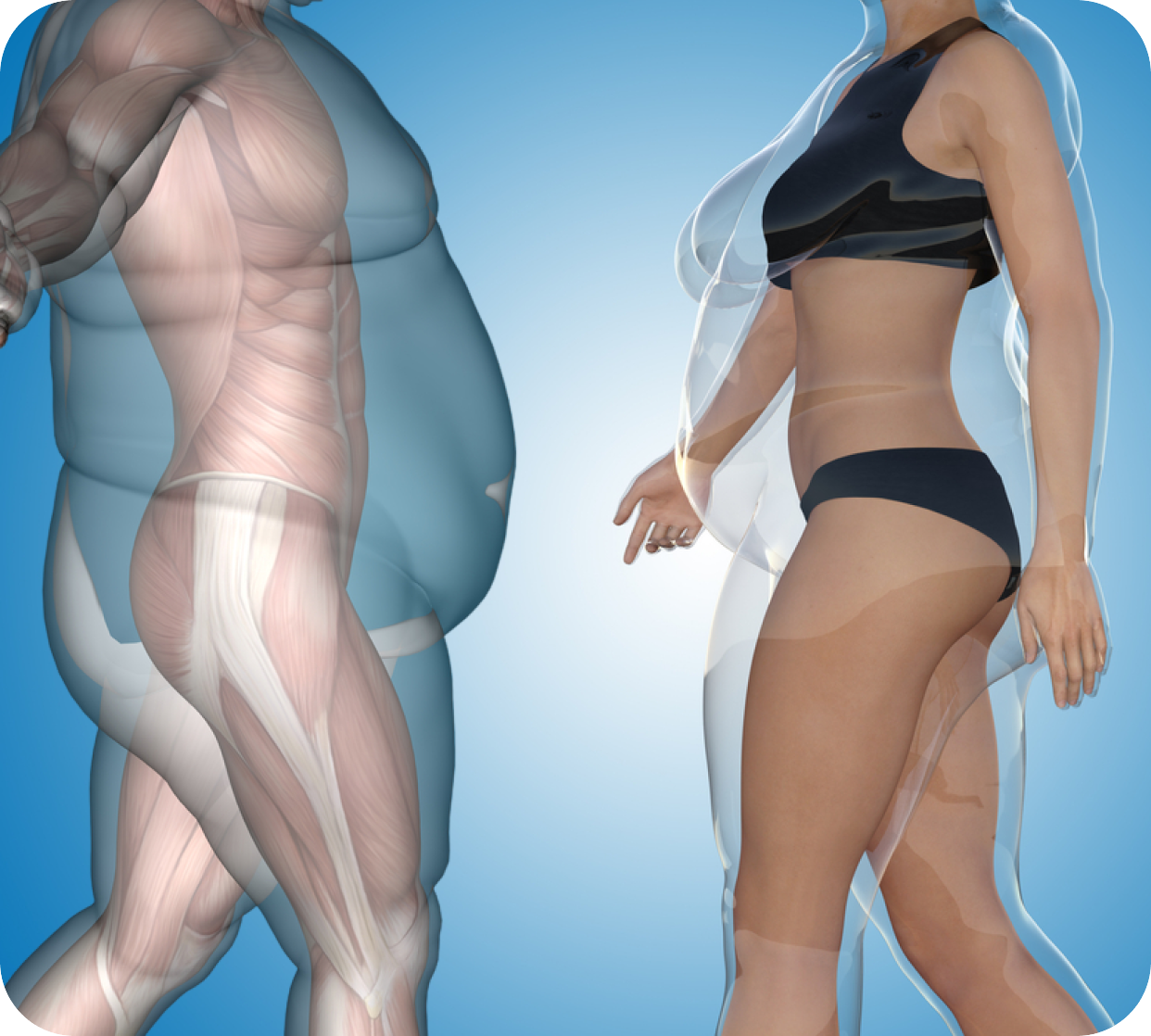
These measurements allow changes in fat and muscle to be tracked independently. This is particularly important for people whose body weight does not change despite meaningful improvements in fitness, health or physique.
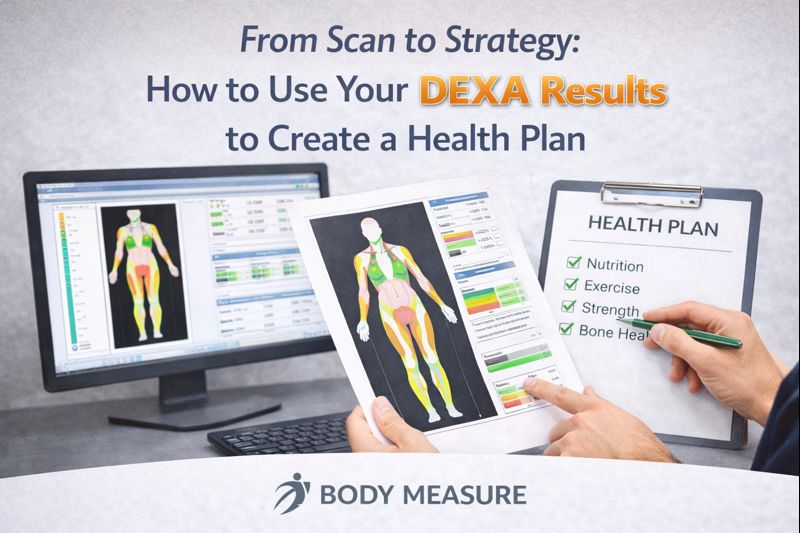
DEXA also provides regional body composition data, breaking results down into areas such as the arms, legs and trunk. This regional analysis offers insight into symmetry, muscle balance and where changes are occurring over time, which is not possible with traditional tracking methods.
It is important to distinguish bone mass from Bone Mineral Density (BMD). Bone mass is included as part of body composition and reflects the mineral content of bone in general terms. A medical BMD DEXA exam, on the other hand, is a separate assessment used to diagnose and monitor conditions such as osteopenia and osteoporosis. BMD exams focus on specific skeletal sites such as the spine and hip, and are reported by a Radiologist using dedicated medical protocols.
A DEXA body composition scan does not diagnose medical conditions, predict disease outcomes or replace clinical assessment. It does not measure strength, fitness, metabolic health or performance directly. Instead, it provides objective data that can be used alongside other information to support informed decision-making.
Understanding what DEXA measures, and what it does not, helps set realistic expectations for your first scan. When used correctly, DEXA offers clarity and consistency, allowing changes in body composition to be tracked accurately over time rather than inferred from indirect or unreliable indicators.
Before Your Appointment: How to Prepare
Preparing for a DEXA scan does not require major changes or strict rules. The goal is simply to minimise factors that can affect accuracy and ensure results are comparable over time, especially if you plan to repeat scans.
Clothing
Wear light, comfortable clothing with no metal components such as zips, buttons, underwire bras or thick embellishments. Metal can interfere with scan readings and may require clothing changes on arrival.
Exercise
Avoid intense training, heavy lifting or long endurance sessions for at least 12 to 24 hours before your scan. Exercise temporarily affects hydration, muscle glycogen and inflammation, which can influence lean mass readings. Light daily activity is fine.
Food and hydration
You do not need to fast unless specifically instructed. Eat and drink as you normally would, but avoid large meals immediately before your appointment. Extreme dehydration or over-hydration can affect results, so aim for normal intake.
Supplements and jewellery
Remove jewellery, watches and metal accessories before the scan. Continue supplements and medications as usual unless advised otherwise by a health professional.
Consistency matters
If you are planning repeat scans, try to replicate conditions each time. Similar clothing, time of day and pre-scan routine help ensure changes reflect real physiological differences rather than preparation variation.
Following these simple steps helps your first DEXA scan provide accurate, useful baseline data without unnecessary stress or over-preparation.
What Happens During Your First DEXA Scan
A DEXA scan is a simple, non-invasive procedure that typically takes only a few minutes to complete. Knowing what to expect can help remove any uncertainty, particularly if it is your first time.
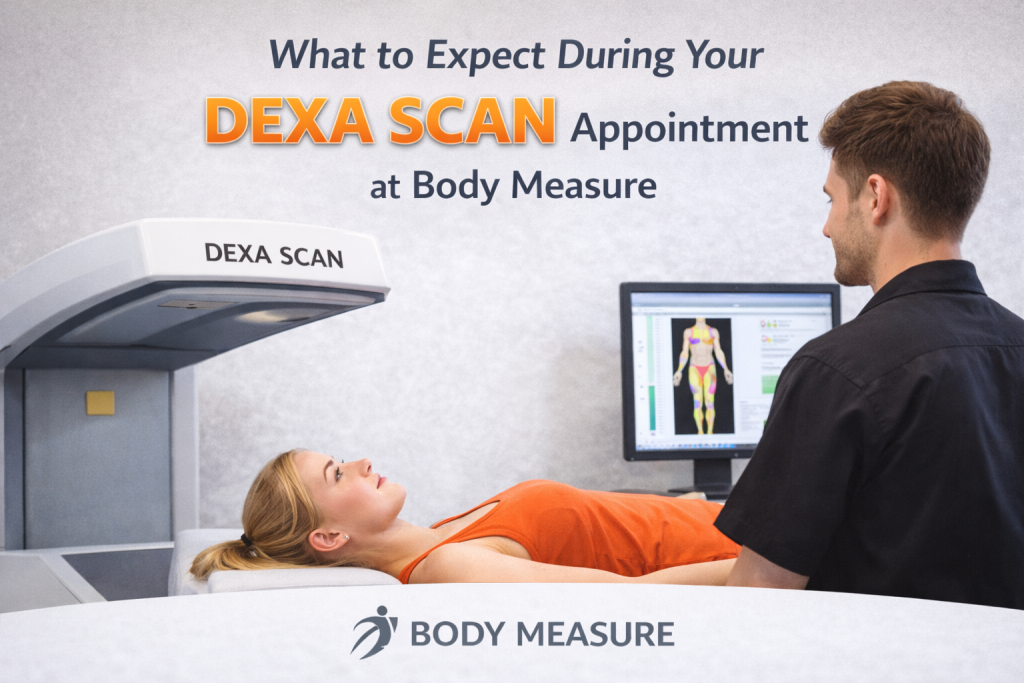
When you arrive, you may be asked to remove shoes, jewellery or metal items and confirm basic details. You will then lie flat on the DEXA scanning table, remaining still while the scan is performed. The scanner arm passes slowly over your body without touching you.
The scan itself is painless and does not require any injections, needles or enclosed spaces. You can breathe normally and do not need to hold your breath at any point. Most body composition scans take approximately 5 to 10 minutes.
DEXA uses a very low dose of radiation, comparable to everyday background exposure. This low level makes it suitable for repeat assessments when tracking changes over time.
Once the scan is complete, you can resume normal activities immediately. There is no recovery time required, and no restrictions on eating, training or daily movement afterwards.
Understanding the simplicity of the process helps many first-time clients feel more comfortable. A DEXA scan is designed to gather accurate information efficiently, without disruption to your day.
Common Mistakes First-Time Clients Make
One of the most common mistakes first-time clients make is trying to “prepare” for a DEXA scan by changing their behaviour at the last minute. Skipping meals, drastically increasing exercise, or restricting fluids can all influence results and reduce the usefulness of the data. A DEXA scan is most valuable when it reflects your normal, day-to-day state.
Another frequent issue is over-interpreting the first scan. Many people view their initial results as a judgment rather than a baseline. Without previous data for comparison, a single scan cannot indicate progress or decline. Its purpose is to establish a starting point for future tracking.
Clothing is another simple but important factor. Wearing garments with metal, thick fabrics or compression materials can interfere with scan readings or require changes on arrival. Choosing light, metal-free clothing avoids unnecessary delays.
Some clients also compare their results to others. Body composition varies widely based on genetics, training history, age and lifestyle. Comparing numbers between individuals can be misleading and does not reflect individual health or progress.
Finally, expecting immediate or dramatic changes between scans is unrealistic. Body composition changes gradually. Meaningful insight comes from tracking trends over time rather than focusing on short-term variation.
Recognising these common pitfalls helps ensure your DEXA experience is informative, accurate and free from unnecessary concern.
How to Approach Your Results After the Scan
After your first DEXA scan, it is important to view the results as information rather than a verdict. The data provides an objective snapshot of your body composition at a single point in time, not a measure of success or failure.
Because this is your first scan, the most valuable outcome is establishing a baseline. Without previous results for comparison, it is not possible to determine progress, improvement or decline. This baseline becomes meaningful when future scans are performed under similar conditions and compared over time.
Small numbers or percentages can sometimes feel confronting when seen in isolation. It helps to remember that body composition exists on a spectrum and is influenced by many factors including age, training history, genetics, nutrition and lifestyle. A single value does not define health, fitness or performance.
DEXA results are best interpreted by focusing on patterns rather than individual figures. Changes in fat mass, lean mass or regional distribution become useful when viewed across multiple scans. This trend-based approach supports informed adjustments rather than reactive decisions.
Approaching your results with curiosity rather than judgement allows DEXA to serve its intended purpose. When used correctly, the data provides clarity and direction, supporting long-term tracking rather than short-term conclusions.
How Often Should You Repeat a DEXA Scan?
Because body composition changes gradually, DEXA scans are most useful when repeated at appropriate intervals rather than performed too frequently. For most people using DEXA for body composition tracking, repeating a scan every 8 to 12 weeks provides meaningful insight without over-interpreting short-term variation.
This timeframe allows enough time for genuine changes in fat mass or lean mass to occur as a result of training, nutrition or lifestyle adjustments. Scanning more frequently may highlight normal fluctuations related to hydration, glycogen storage or recovery rather than true physiological change.
The ideal interval can vary depending on individual goals. Athletes or people following structured training programs may align scans with training blocks, while those focused on general health monitoring may choose slightly longer intervals.
Consistency is more important than frequency. Repeating scans under similar conditions, such as time of day and preparation routine, supports accurate comparison and clearer interpretation of trends.
When DEXA is used as a long-term tracking tool rather than a short-term check-in, the data becomes far more valuable and easier to interpret with confidence.
Why Consistency Matters More Than Perfection
When it comes to DEXA scanning, consistency has a far greater impact on result quality than trying to follow a perfect preparation routine. Small day-to-day variations in hydration, food intake or training are normal, and attempting to eliminate them is unrealistic.
What matters most is repeating scans under broadly similar conditions. Scanning at a similar time of day, wearing comparable clothing and following the same general pre-scan routine helps ensure that differences between scans reflect real physiological changes rather than preparation inconsistencies.
Perfection-driven behaviour can actually reduce the usefulness of DEXA data. Skipping meals, avoiding fluids or altering training purely to influence results may produce numbers that look different, but they do not represent meaningful or sustainable change.
DEXA is designed to support long-term tracking, not short-term optimisation. When preparation is consistent, trends become easier to identify and interpret with confidence. This allows decisions around training, nutrition and lifestyle to be based on reliable data rather than noise.
By prioritising consistency over perfection, DEXA scans remain a practical, low-stress tool that supports informed monitoring and realistic expectations over time.
Final Thoughts
Preparing for your first DEXA scan does not need to be complicated. When approached with realistic expectations and consistent preparation, DEXA provides clear, objective information that supports understanding rather than judgment.
The most important outcome of a first scan is establishing a reliable baseline. From there, repeat scans performed under similar conditions allow meaningful trends to emerge, helping separate real physiological change from short-term fluctuation.
DEXA works best as part of a long-term approach to health, fitness and body composition tracking. By focusing on consistency, clarity and informed interpretation, your scan results become a valuable reference point rather than a source of uncertainty.
With the right preparation and perspective, a DEXA scan offers insight that traditional measurements cannot provide, supporting smarter decisions and long-term confidence in your progress.
FAQs Answered
Where can I get a DEXA scan in Sydney?
DEXA scans in Sydney are available through specialised clinics that focus on body composition and bone health assessment. Body Measure provides DEXA scanning using medical-grade equipment, with an emphasis on accuracy, consistency between scans, and a clear explanation of results. Scans are performed in a dedicated clinical setting designed for repeat monitoring rather than one-off measurements.
Do I need a referral for a DEXA scan in Sydney?
A referral is not required for DEXA body composition scans at Body Measure. These scans are booked privately and are commonly used for fitness tracking, health monitoring and baseline assessment. Medical Bone Mineral Density DEXA exams may have different referral requirements depending on the purpose of the scan.
How long does a DEXA scan appointment take?
A DEXA scan appointment is brief and efficient. The scan itself typically takes around 5 to 10 minutes. Allow a short amount of additional time for preparation and explanation, but most appointments are completed comfortably within a short visit.
How soon will I receive my DEXA scan results?
DEXA scan results are available promptly. At Body Measure, results are explained clearly so you understand what the data shows and how it can be used for tracking over time. This allows you to leave your appointment with a clear baseline rather than unanswered questions.
What is the difference between a body composition DEXA scan and a bone density DEXA scan?
A body composition DEXA scan measures fat mass, lean mass and bone mass, along with regional distribution across the body. It is commonly used for fitness, health and long-term tracking.
A bone density DEXA scan, also known as a Bone Mineral Density exam, is a separate medical assessment used to evaluate bone health and fracture risk. It focuses on specific skeletal sites and follows different clinical protocols. Choosing the correct scan ensures the results match your goals.
Can I use DEXA scans for long-term tracking at the same clinic?
Yes. DEXA is particularly valuable when used consistently over time. At Body Measure, scans are performed using standardised protocols to support accurate comparison between visits. This consistency allows changes in body composition to be tracked reliably, making DEXA a useful tool for long-term monitoring rather than isolated measurements.