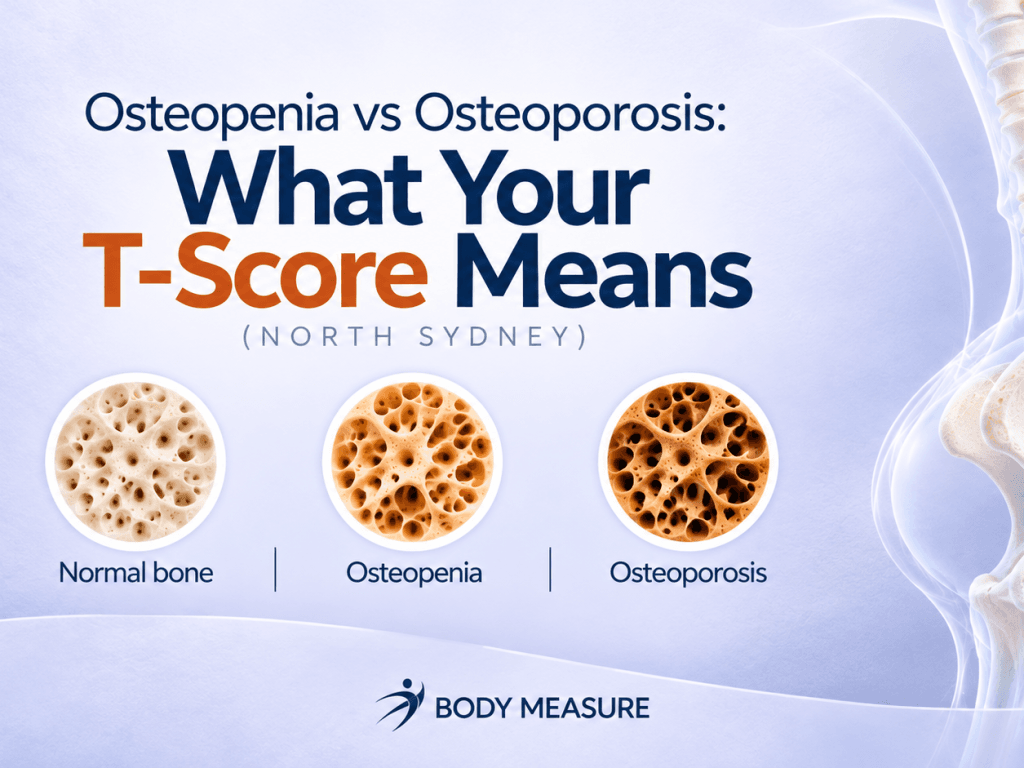

A T-score compares your bone density to a healthy young adult's peak bone density. A Z-score compares it to others your age and sex. T scores are used to assess osteoporosis risk; Z-scores add context.
| T-score | Z-score | |
|---|---|---|
| COMPARED WITH | Healthy young adult | People your age and sex |
| MAIN PURPOSE | Osteoporosis assessment | Peer / age-group context |
| COMMONLY USED FOR | Post-menopausal women | Additional clinical context |
Important: Not all DEXA scans measure bone density
A DEXA body composition scan and a Bone Mineral Density (BMD) scan use the same underlying technology, but they answer different questions.
T-score vs Z-score: what's the difference?
What is a T-score?
A T-score compares your bone mineral density with the average peak bone density of a healthy young adult of the same sex.
For post-menopausal women, T-scores are commonly used when assessing osteoporosis risk.
What is a Z-score?
A Z-score compares your bone mineral density with people of the same age and sex.
It provides additional context by showing whether your bone density is broadly typical for someone at a similar stage of life.
For post-menopausal women, the T-score is generally prioritised when assessing osteoporosis risk, while the Z-score can provide additional information.
What your T-score means
Your T-score falls into one of three broad categories:
- −1.0 or above Normal
- −1.0 to −2.5 Low bone density / Osteopenia
- −2.5 or below Consistent with osteoporosis
Looking for your specific number? Here's roughly where common T-score results fall within those categories:
| T-score | General category |
|---|---|
| 0 to −1.0 | Normal |
| −1.0 to −1.5 | Mild osteopenia |
| −1.5 to −2.0 | Moderate osteopenia |
| −2.0 to −2.5 | Osteopenia, nearing the osteoporosis threshold |
| −2.5 to −3.0 | Consistent with osteoporosis |
| Below −3.0 | Consistent with more advanced osteoporosis |
This table gives general positioning only — it isn't a diagnosis. Always interpret your result with a healthcare professional.
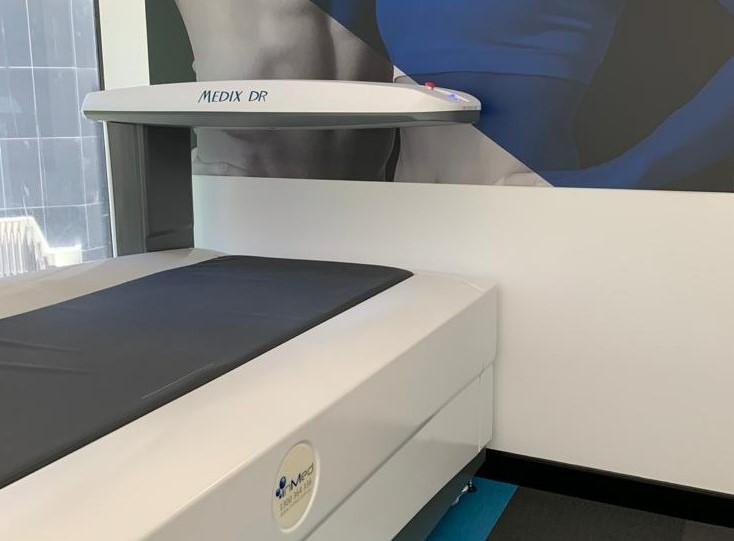
One scan is a snapshot. Trends tell the story.
A single T-score or Z-score gives you information about your bone density at that point in time. Tracking your results over multiple scans can provide a clearer picture of how your bone health changes over time.
Small changes don’t always mean a significant improvement or decline. Your results should be interpreted alongside your individual circumstances and clinical guidance.
3 things to remember
-
One score doesn't tell the whole story
T-scores and z-scores are part of a broader assessment. -
Don't compare your score with someone else's
Bone density varies between individuals. -
Look at the trend, not just one result
Repeat scans can help show how your bone density changes over time.
When should bone density be checked again?
Bone density changes gradually, so repeat scanning is generally not done frequently. The timing of follow-up depends on your individual risk factors, baseline results and clinical guidance.
Your healthcare professional can recommend an appropriate interval for monitoring.
FAQs
The best DEXA scan for bone density assessment is a Bone Mineral Density (BMD) DEXA scan performed using medical-grade equipment and standardised clinical protocols. In Sydney, Body Measure offers access to high-quality DEXA scanning focused on accurate bone density measurement, consistency between scans and clear interpretation of results. This approach supports reliable monitoring of bone health over time.
T-scores and Z-scores are measurements derived from a Bone Mineral Density DEXA scan. A T-score compares your bone density to that of a healthy young adult and is commonly used to assess osteoporosis risk. A Z-score compares your bone density to others of the same age and sex, helping provide additional clinical context.
For post-menopausal women, T-scores are prioritised in clinical assessment because they relate bone density to peak bone mass and are used to evaluate osteoporosis risk. Z-scores may still be included for context, but T-scores play the primary role in interpretation after menopause.
T-scores indicate how much bone density differs from peak levels. Lower T-scores are associated with reduced bone strength and higher fracture risk. However, fracture risk is influenced by multiple factors, so T-scores are interpreted alongside age, medical history and other risk considerations.
Yes. Bone density can change gradually over time, and this may be reflected in T-scores and Z-scores across repeat DEXA scans. Meaningful changes are usually seen over longer intervals, which is why monitoring trends is more informative than focusing on a single result.
Yes. DEXA scanning is widely regarded as the gold standard for measuring bone mineral density due to its accuracy, consistency and clinical validation. It is used internationally for osteoporosis assessment and monitoring.