
A DEXA scan provides detailed and highly accurate information about your body composition, but the value of that information depends on how well it is understood. Many people receive their DEXA results and focus on a single number, such as body fat percentage or weight, without fully understanding what the full report is showing. This can lead to confusion, unnecessary concern or missed opportunities to use the data effectively.
DEXA results are designed to give a complete picture of how fat, lean tissue and bone mass are distributed throughout the body. Unlike basic measurements or estimated tests, DEXA offers precise, repeatable data that can support informed decisions about health, fitness and long-term wellbeing. However, interpreting these results correctly requires context and clarity.
This guide explains how to read and understand your DEXA scan results in a practical and approachable way. It breaks down each key metric, explains what matters most, and highlights common misunderstandings to avoid. By the end, you will be better equipped to interpret your results confidently and use them as a meaningful tool rather than just a set of numbers.

Key Takeaways
- DEXA results provide detailed insights into fat mass, lean mass, bone mass and visceral fat
- Body composition trends are more important than single measurements
- Body fat percentage offers more useful insight than body weight alone
- Lean mass distribution and symmetry provide valuable context for training and health
- Bone mass measured in body composition scans is different from Bone Mineral Density (BMD)
- Visceral fat levels help indicate metabolic health risk
- Understanding results correctly supports better long-term health and fitness decisions
Summary Table: Understanding Key DEXA Results
| Result Category | What It Shows | Why It Matters |
| Fat mass and body fat percentage | Total amount and proportion of body fat | Helps assess fat loss progress and health risk |
| Lean mass | Muscle and other non-fat tissue | Important for strength, metabolism and function |
| Bone mass | Total amount of bone tissue | Contributes to overall body composition |
| Bone Mineral Density (BMD) | Bone strength and fracture risk (separate exam) | Used for medical assessment of bone health |
| Visceral fat | Fat stored around internal organs | Linked to metabolic and cardiovascular risk |
| Regional body composition | Distribution of fat and lean mass across the body | Identifies imbalances and tracks targeted changes |
What a DEXA Scan Measures (Quick Recap)
A DEXA body composition scan provides a detailed breakdown of the body’s key components by measuring them directly rather than estimating them. This allows for a clear and accurate view of how fat, lean tissue and bone mass are distributed throughout the body.
Fat mass refers to the total amount of fat tissue in the body. DEXA identifies not only how much fat is present, but also where it is stored, which is important for understanding health and metabolic risk.
Lean mass includes muscle, organs and other non-fat tissues. DEXA measures total lean mass and shows how it is distributed across different regions of the body, offering insight into muscle balance and functional strength.
Bone mass reflects the total amount of bone tissue and forms part of the overall body composition assessment. This measurement is not the same as Bone Mineral Density, which requires a separate medical DEXA exam.
DEXA also estimates visceral fat, the fat stored around internal organs, which is associated with metabolic and cardiovascular health risk. In addition, it provides regional body composition analysis, breaking results down into areas such as arms, legs and trunk.
Together, these measurements create a comprehensive snapshot of body composition that can be used to track changes over time and support informed health and fitness decisions.
Understanding Fat Mass and Body Fat Percentage

Fat mass refers to the total amount of fat tissue in the body, while body fat percentage represents how much of your total body weight is made up of fat. Although these terms are often used interchangeably, they provide slightly different insights and are best interpreted together.
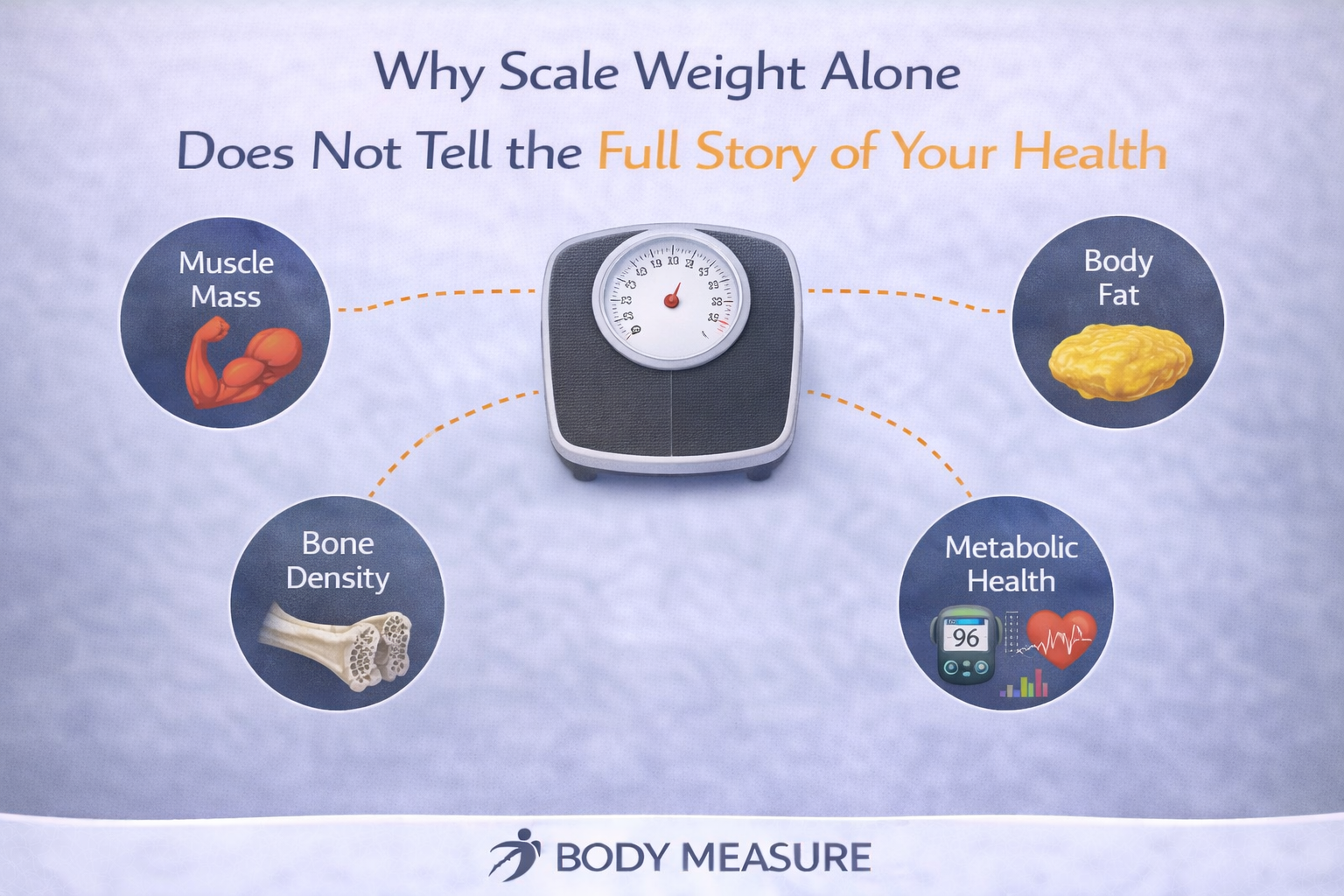
Body fat percentage is generally more meaningful than body weight when assessing health and progress. Two people can weigh the same but have very different proportions of fat and lean tissue, which affects metabolic health, physical performance and long-term wellbeing. DEXA allows these differences to be measured accurately rather than inferred.
DEXA also provides information about fat distribution, which is an important factor in health risk. Fat stored around the abdomen is associated with higher metabolic risk than fat stored in the hips or limbs. Understanding where fat is stored can help guide more targeted lifestyle and training decisions.
It is important to avoid rigid comparisons to ideal or universal body fat targets. Healthy ranges vary depending on age, sex, training background and individual goals. When reviewing DEXA results, the most valuable insight often comes from tracking changes over time, rather than focusing on a single number from one scan.
By understanding both fat mass and body fat percentage, DEXA results can be used to assess progress more accurately and set realistic, informed expectations.
Lean Mass and Muscle Distribution Explained
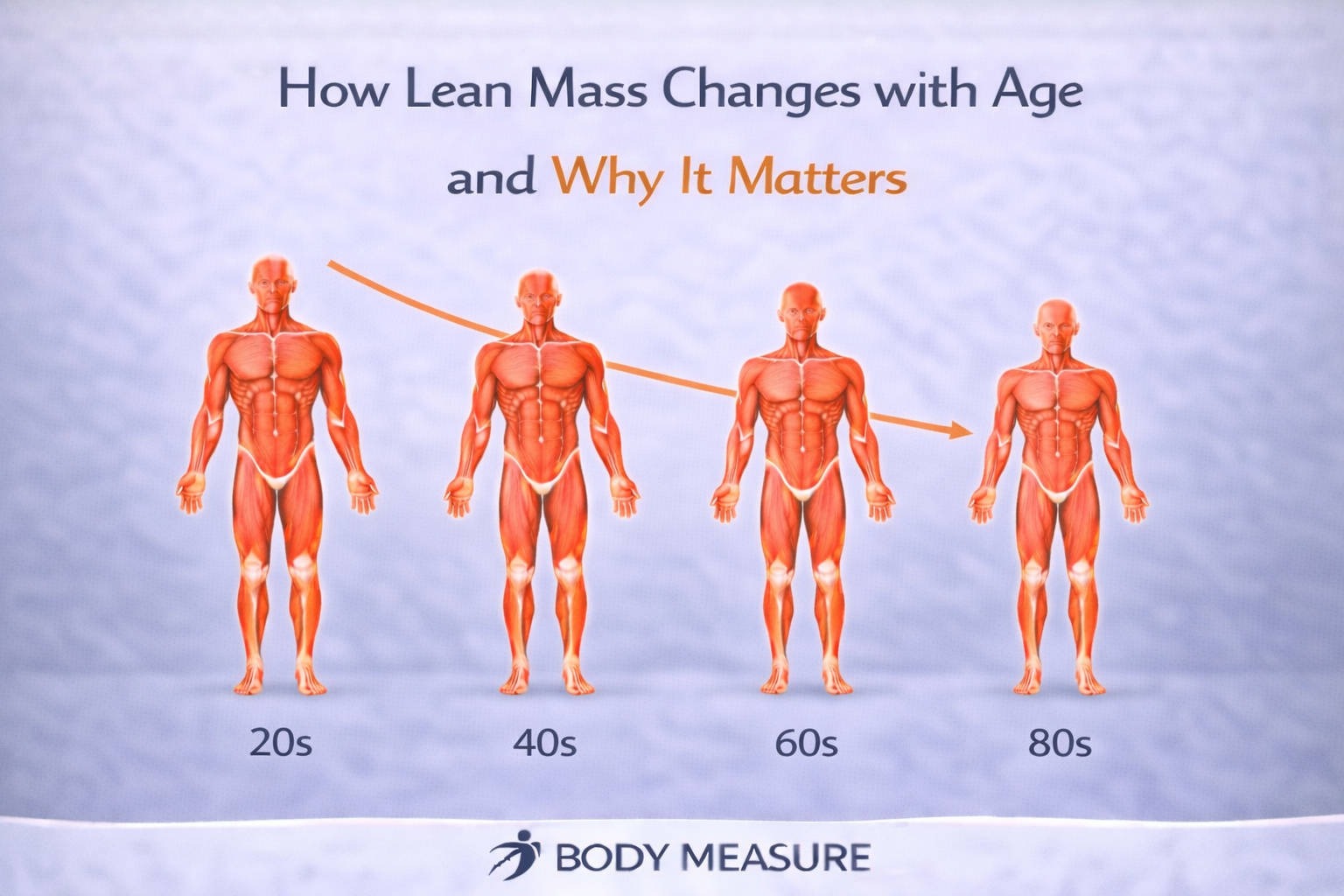
Lean mass includes muscle, organs and other non-fat tissues, with skeletal muscle making up the largest and most functionally important component. Understanding lean mass is essential because it plays a key role in strength, movement, metabolic health and overall physical resilience.
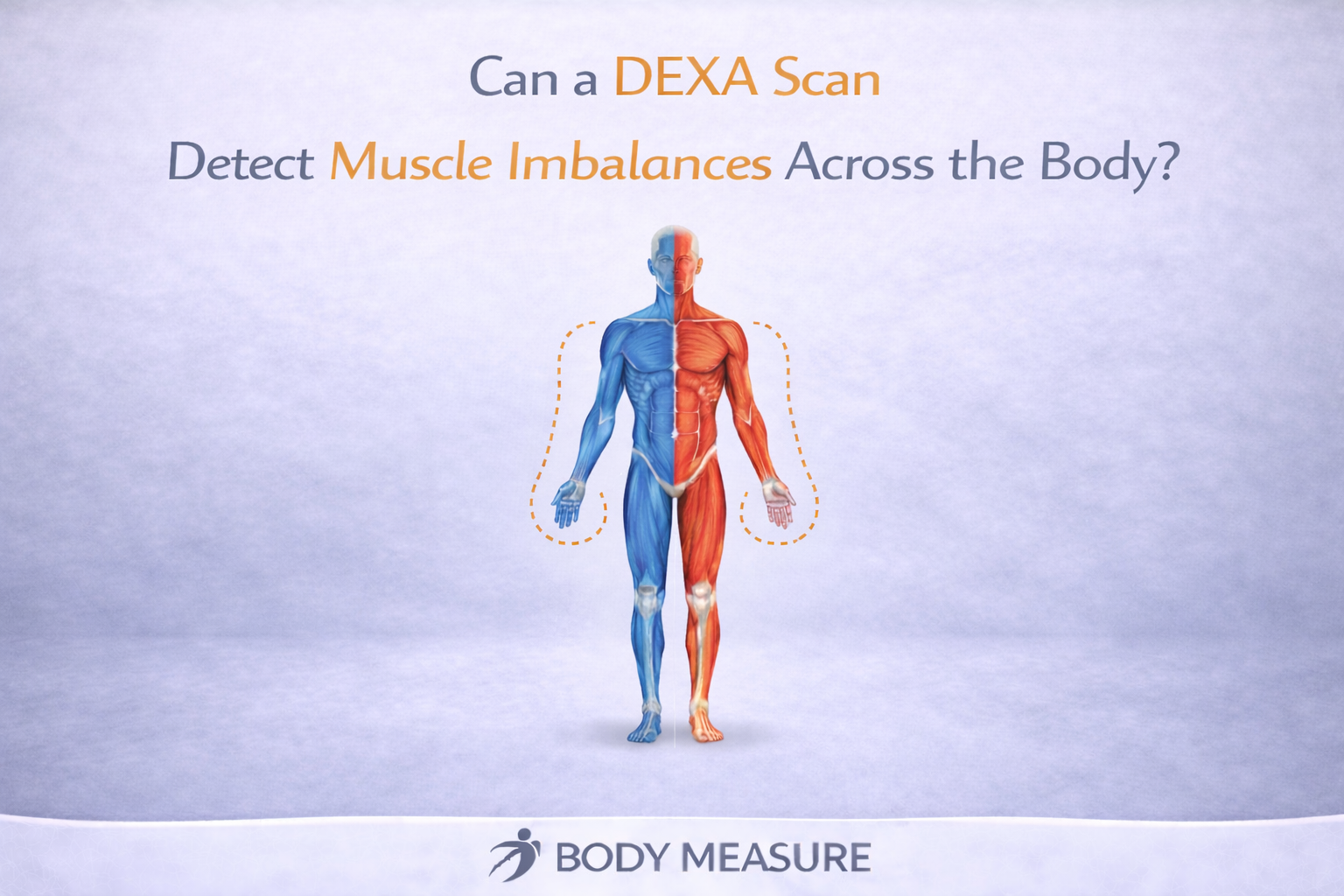
DEXA not only measures total lean mass, but also shows how muscle is distributed across different regions of the body. This regional analysis provides insight into left–right symmetry and upper-to-lower body balance, which can be useful for identifying imbalances that may affect performance or increase injury risk.
Tracking lean mass is particularly important during fat loss. Without accurate measurement, reductions in body weight may reflect muscle loss rather than fat loss. DEXA allows changes in lean mass to be monitored directly, helping ensure that training and nutrition strategies are supporting muscle retention or growth.
As with other DEXA metrics, lean mass results are most valuable when assessed over time. Small variations between scans are normal, but consistent trends provide meaningful information about how the body is adapting to training, recovery and lifestyle changes.
Bone Mass vs Bone Mineral Density (BMD): How to Read Bone Results
Bone mass and Bone Mineral Density (BMD) are related but measure different aspects of bone health, and the distinction is often misunderstood. A DEXA body composition scan measures bone mass, which represents the total amount of bone tissue and contributes to overall body composition.
Bone mass alone does not indicate bone strength or diagnose conditions such as osteopenia or osteoporosis. To assess bone strength and fracture risk, a Bone Mineral Density (BMD) exam is required. While it uses the same DEXA technology, a BMD exam follows a separate medical protocol, uses different software and is reported by a Radiologist.
For individuals interested in a complete understanding of both body composition and bone health, some may benefit from having both a body composition DEXA scan and a BMD exam. Together, these assessments provide insight into tissue distribution as well as clinically validated bone density information. BMD takes about 10 additional minutes.
Visceral Fat: What It Is and Why It Matters

Visceral fat is the fat stored deep within the abdominal cavity, surrounding organs such as the liver and intestines. Unlike subcutaneous fat, which sits under the skin, visceral fat is metabolically active and more closely linked to health risks.
Higher levels of visceral fat are associated with increased risk of conditions such as cardiovascular disease, insulin resistance and metabolic dysfunction. Because visceral fat is not always visible from the outside, it cannot be reliably assessed through body weight or appearance alone.
DEXA is one of the few non-invasive methods capable of estimating visceral fat accurately. By analysing the abdominal region, DEXA provides objective data that helps identify internal fat levels and track changes over time.
When interpreting visceral fat results, trends are more important than individual measurements. Small changes between scans are normal, while consistent reductions or increases over time provide more meaningful insight into metabolic health.
Regional Body Composition and Symmetry
One of the key advantages of a DEXA scan is its ability to break body composition down into specific regions, including the arms, legs and trunk. This regional analysis provides insight that total body numbers alone cannot offer.
By comparing lean mass and fat mass across different areas, DEXA can highlight asymmetries or imbalances between the left and right sides of the body, or between upper and lower body. These differences may be relevant for athletes, individuals recovering from injury, or anyone looking to improve movement efficiency and strength balance.
Regional body composition data is also useful for tracking targeted changes. For example, it can help identify where fat loss is occurring, whether muscle development is balanced, and how specific training or rehabilitation programs are influencing different parts of the body.
When reviewed over time, regional analysis adds important context to overall body composition trends and supports more informed, individualised decision-making.
Tracking Changes Over Time: How to Compare DEXA Scans
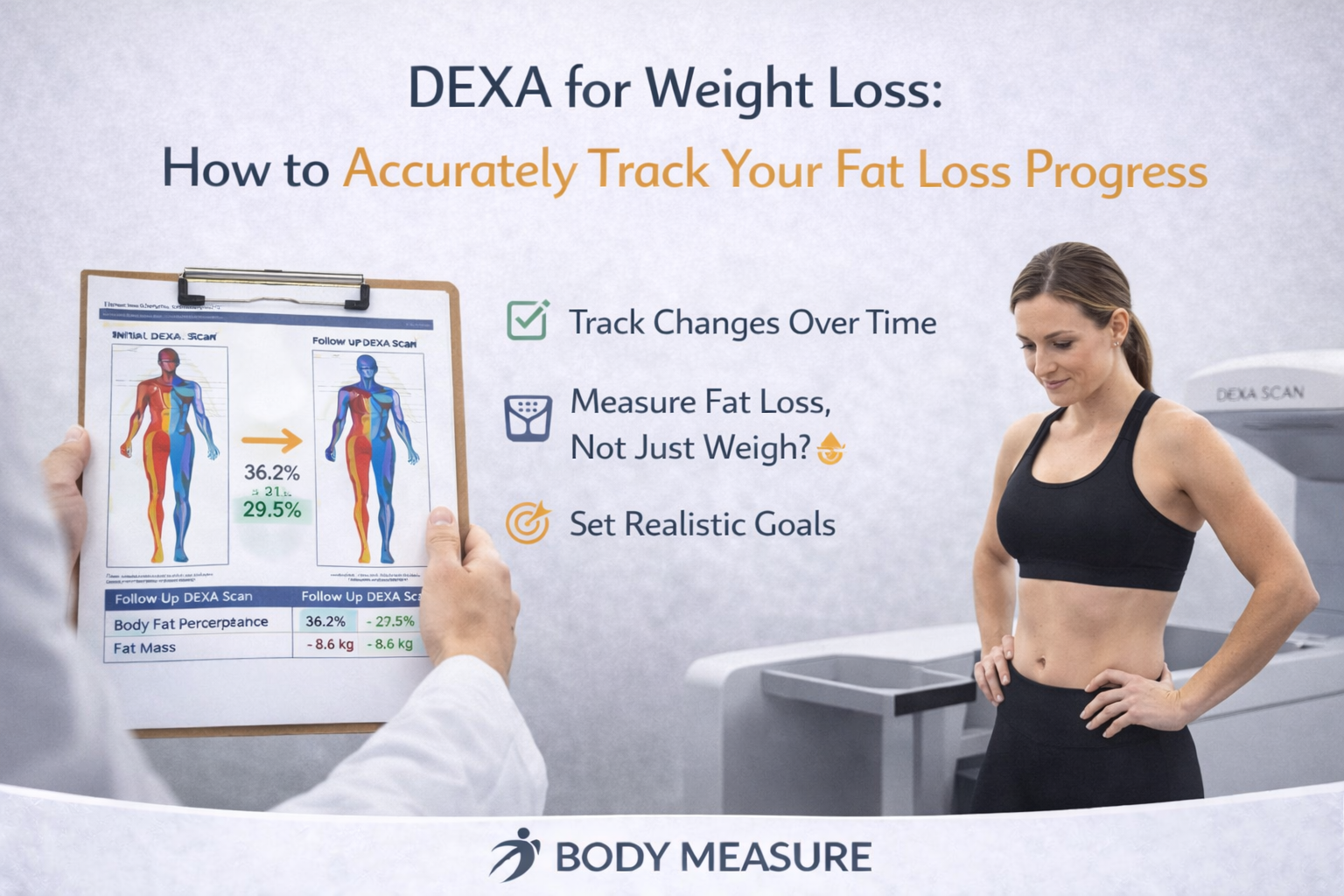
One of the greatest strengths of DEXA scanning is its ability to track meaningful changes in body composition over time. Because DEXA results are highly consistent, comparing scans provides a reliable way to assess progress rather than relying on short-term fluctuations.
When reviewing changes, it is important to look at trends rather than single measurements. Small variations between scans can occur and do not necessarily reflect real physiological change. Meaningful insights usually emerge over weeks or months, particularly when scans are performed under similar conditions.
DEXA is commonly used at regular intervals, such as every 6 to 12 weeks, depending on individual goals. This timeframe allows enough time for genuine changes in fat mass, lean mass or visceral fat to occur and be accurately detected.
By comparing scans thoughtfully and focusing on longer-term patterns, DEXA results can be used to guide training, nutrition and lifestyle decisions with greater confidence and clarity.
Common Misinterpretations of DEXA Results
One of the most common mistakes when reviewing DEXA results is focusing on a single number rather than the full picture. Body fat percentage, weight or lean mass alone do not provide enough context without considering how these values relate to each other and how they change over time.
Another frequent misunderstanding is confusing bone mass with Bone Mineral Density (BMD). Bone mass reflects the amount of bone tissue as part of body composition, while BMD is a separate medical assessment used to evaluate bone strength and fracture risk.
People may also expect rapid changes between scans. In reality, meaningful changes in body composition take time, and small differences between scans are normal. Comparing results to others rather than personal trends can also lead to unnecessary concern or unrealistic expectations.
DEXA results are most useful when interpreted with context, patience and an emphasis on long-term patterns rather than isolated numbers.
Using Your DEXA Results to Guide Health and Fitness Decisions
DEXA results are most valuable when used as a tool to support informed decision-making rather than as a judgement of progress. By understanding how fat mass, lean mass and bone mass change over time, individuals can make more targeted adjustments to training, nutrition and lifestyle.
For example, tracking fat mass alongside lean mass helps determine whether weight changes reflect fat loss, muscle gain or muscle loss. Regional and symmetry data can inform strength training priorities, rehabilitation programs or movement efficiency goals. Visceral fat trends can also highlight the need for changes that support metabolic health.
Interpreting results in context is essential. A single scan provides a snapshot, while multiple scans reveal patterns that are far more meaningful. For this reason, professional guidance can be helpful in translating DEXA data into practical actions aligned with individual goals.
When used consistently and thoughtfully, DEXA results provide objective insight that supports sustainable, long-term health and fitness strategies rather than short-term reactions.
Final Thoughts
Understanding your DEXA scan results allows you to move beyond surface-level measurements and gain a clearer picture of how your body is actually changing. Rather than relying on weight alone, DEXA provides accurate insight into fat mass, lean mass, bone mass and visceral fat, helping you interpret progress with greater confidence.
The real value of a DEXA scan lies in how the data is used over time. When results are viewed in context and tracked consistently, they can support informed decisions around training, nutrition and long-term health. By focusing on trends rather than individual numbers, DEXA becomes a practical tool for understanding your body and guiding meaningful, sustainable change.
FAQs Answered
What is a healthy body fat percentage on a DEXA scan?
A healthy body fat percentage varies depending on factors such as age, sex, training background and individual goals. Rather than aiming for a single ideal number, DEXA results are best interpreted by looking at whether body fat levels are moving in a healthy direction over time. Tracking trends provides far more useful insight than comparing results to fixed targets.
What is the difference between fat mass and body fat percentage?
Fat mass refers to the total amount of fat tissue in the body, measured in kilograms. Body fat percentage represents how much of your total body weight is made up of fat. Both metrics are important, as fat mass shows absolute change while body fat percentage provides context relative to overall body size.
How should I interpret lean mass results on a DEXA scan?
Lean mass includes muscle and other non-fat tissues. When reviewing lean mass results, it is important to assess both total lean mass and how it is distributed across the body. Changes in lean mass over time can indicate whether training and nutrition strategies are supporting muscle maintenance or growth, particularly during fat loss.
Does a DEXA body composition scan measure bone density or bone mass?
A DEXA body composition scan measures bone mass, which reflects the total amount of bone tissue as part of overall body composition. Bone strength and fracture risk are assessed through a separate Bone Mineral Density (BMD) exam, which uses the same DEXA technology but follows a different medical protocol and reporting process.
What do visceral fat results mean for my health?
Visceral fat is the fat stored around internal organs and is associated with increased metabolic and cardiovascular health risk. DEXA provides an estimate of visceral fat, allowing changes to be monitored over time. Trends in visceral fat are more meaningful than single measurements and can help guide lifestyle and health decisions.
How often should I repeat a DEXA scan to track progress?
DEXA scans are commonly repeated every 6 to 12 weeks, depending on individual goals. This timeframe allows enough time for meaningful changes in fat mass, lean mass or visceral fat to occur and be measured accurately.
Why shouldn’t I compare my DEXA results to those of other people?
Body composition is highly individual and influenced by genetics, age, lifestyle and training history. Comparing results to others can lead to unrealistic expectations or unnecessary concern. DEXA results are most valuable when used to track personal changes and trends over time rather than comparisons with others.